

Weekly writing about the art market and the convergence of art and technology. By day, I’m a partner at the Robert Fontaine Gallery and a data science consultant. By night, I write Artxiom, ideas at the intersection of art, technology, and finance.
If you haven’t subscribed, join today by subscribing here:
Ellsworth Kelly at the Fondation Maeght (Part 1)
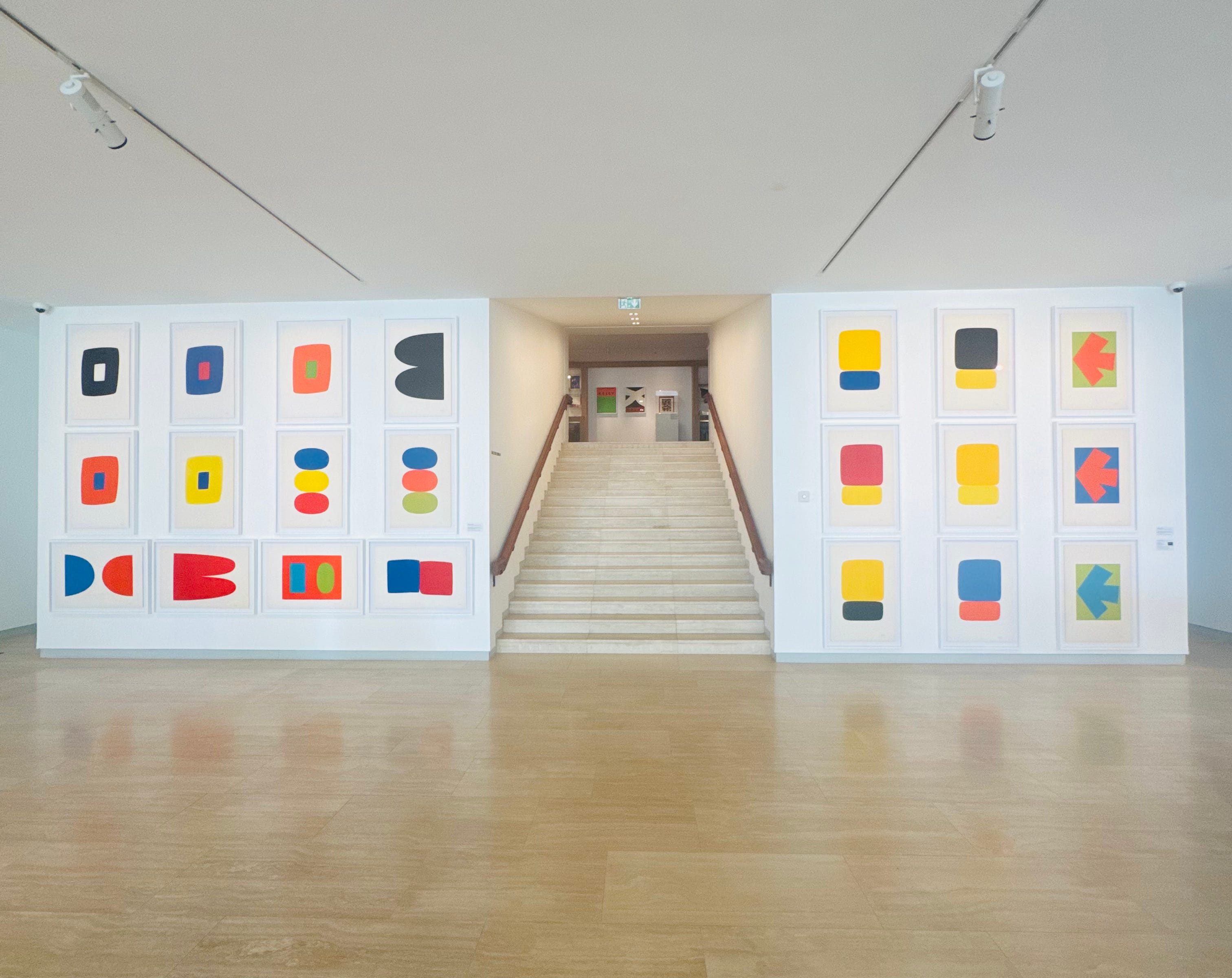
There are few places where Ellsworth Kelly’s work feels as naturally at home as the Fondation Maeght, located in the storied and celebrated town of Saint-Paul-de-Vence, in the south of France. On a recent visit to the foundation, I was struck by the sight of the almost complete Suite of Twenty-Seven Color Lithographs, created by Kelly in 1964-65 (Fig. 1). I had never before encountered so many of these works together in a single room, and seeing them as a group revealed a sense of rhythm, variation, and visual dialogue that is difficult to appreciate when the prints are viewed individually. The suite is part of the foundation’s permanent collection.
Seen individually, the lithographs can appear deceptively simple: singular geometric shapes, restricted palettes, an almost complete absence of gesture or texture. Seen together, however, they become something much more ambitious. They form a kind of visual vocabulary in which the same fundamental shapes are continually recombined through different colors, proportions and relationships. This idea of repetition and variation is central to understanding Kelly. This is why, at the gallery and at art fairs, we always try to show as many of these prints together as possible (Fig. 2 & 3)
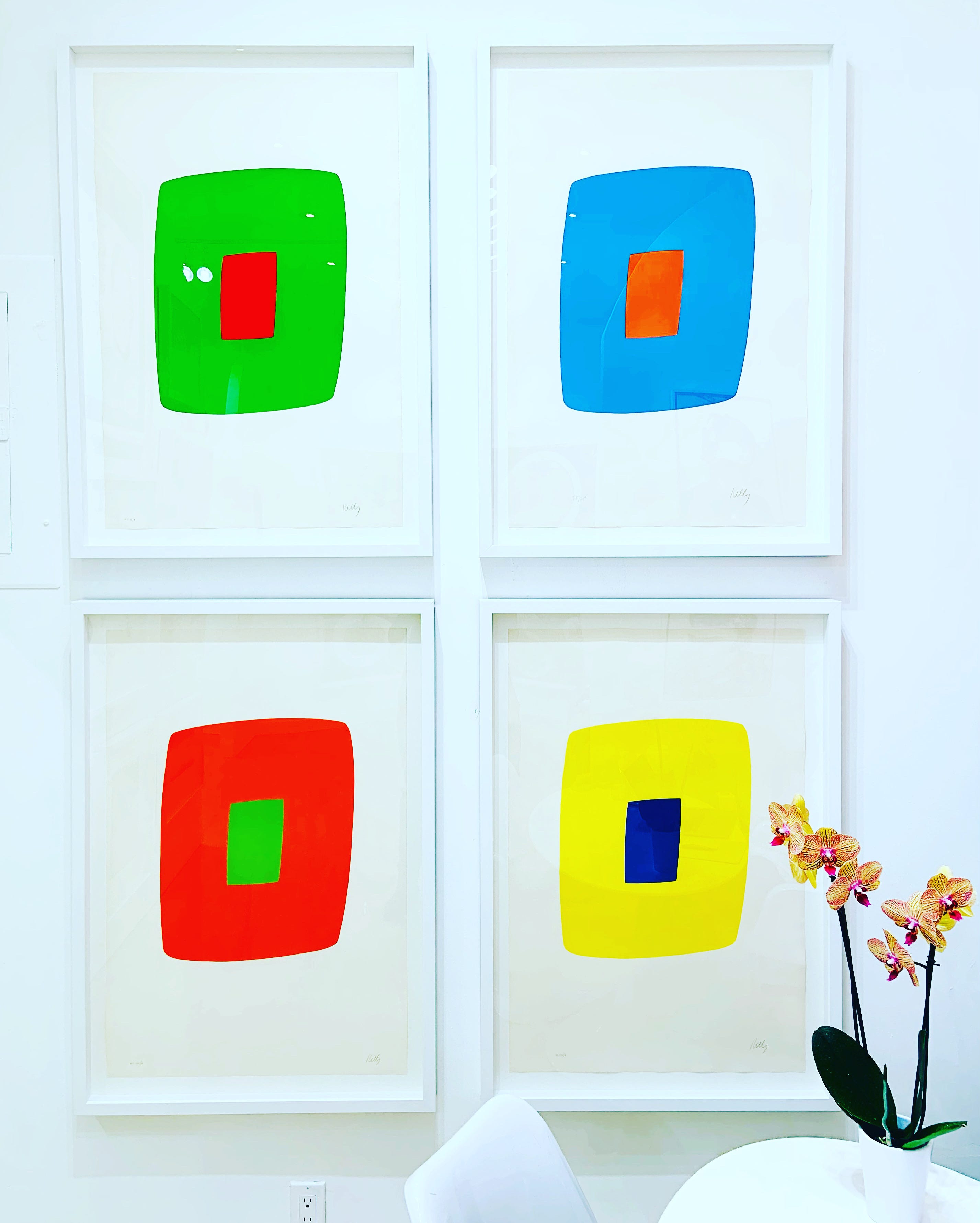
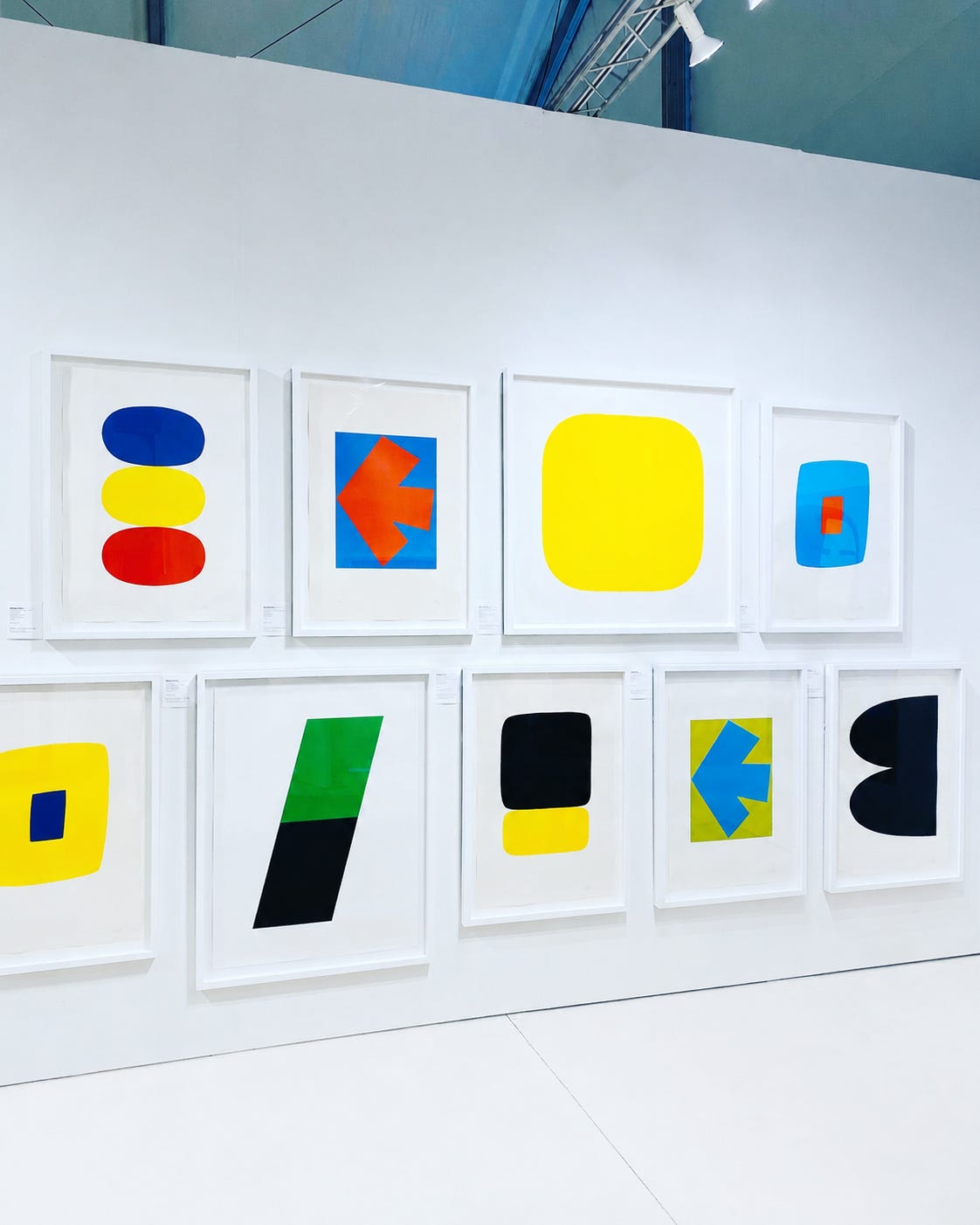
The Fondation Marguerite et Aimé Maeght opened on July 28, 1964. It was founded by Aimé and Marguerite Maeght, the influential French art dealers, publishers and friends of many of the most important artists of the postwar period. The building was designed by the Catalan architect Josep Lluís Sert, in close collaboration with the Maeghts and artists including Joan Miró, Georges Braque and Alberto Giacometti. The result was deliberately something different from a conventional museum. The Fondation describes itself as not a museum, but as a place conceived for artists to create, meet, exhibit and exchange ideas. Its permanent collection today encompasses approximately 13,000 works and includes artists ranging from Braque, Miró and Giacometti to Calder, Chagall, Dubuffet, Chillida, Tàpies and Kelly (Fig. 4 & 5)
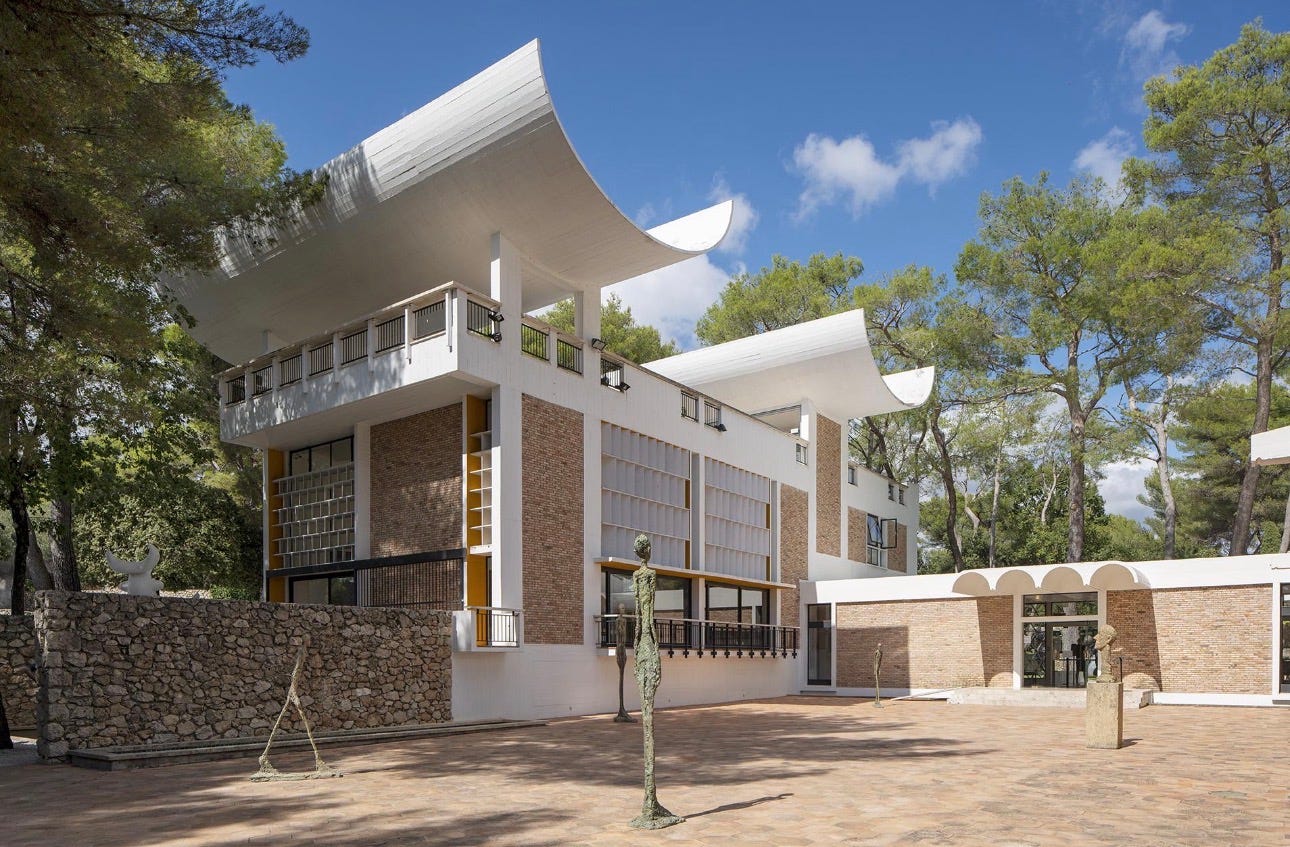
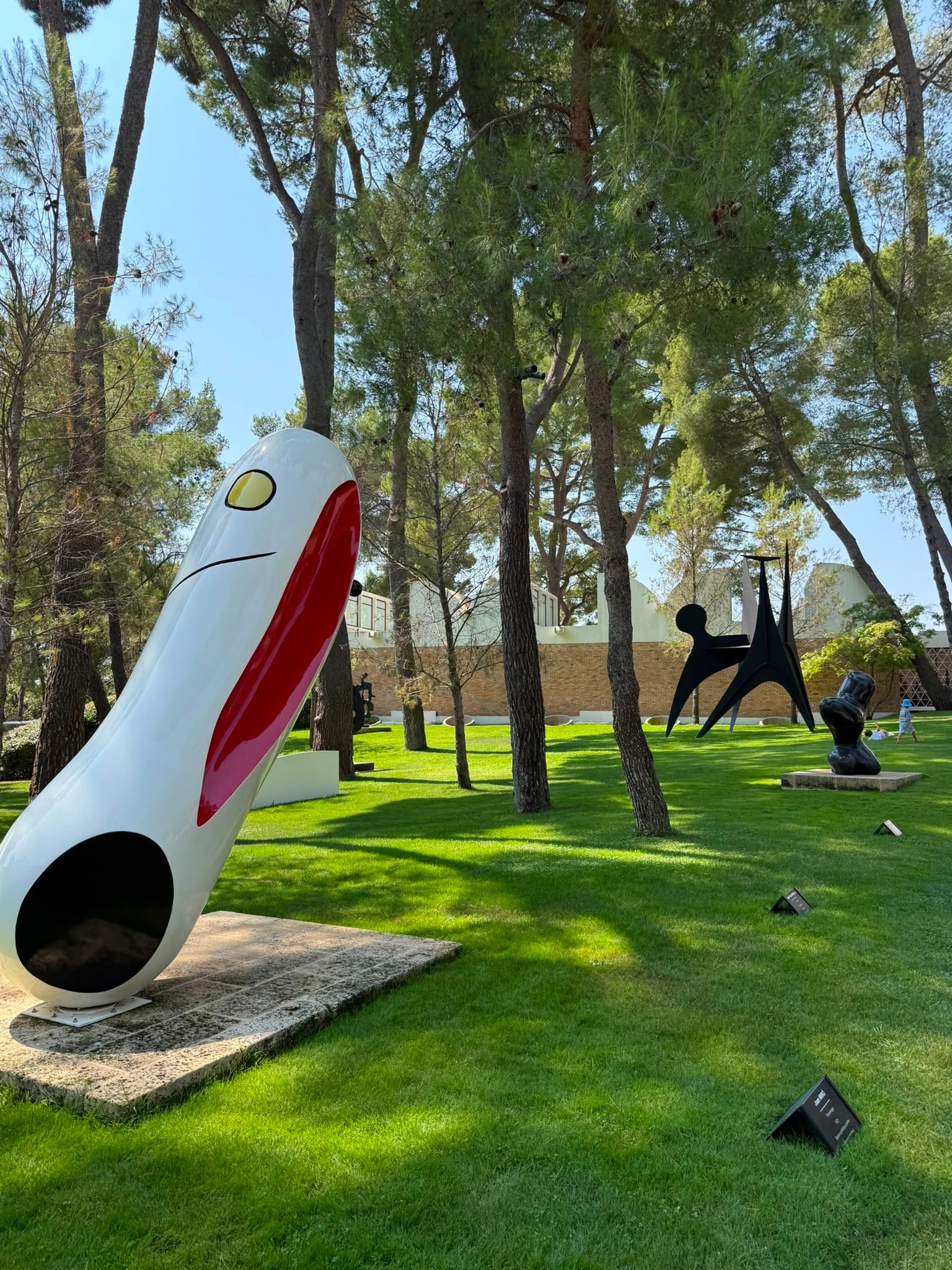
For Kelly, France was not simply another place in which to exhibit. It was fundamental to his development. Born in New York in 1923, Kelly spent important years in France after the Second World War. His experience there helped separate him from the dominant conventions of American painting at the time. Rather than building compositions through expressive brushstroke or painterly gesture, Kelly became increasingly interested in isolated forms, silhouettes, pure color and the relationship between an object and the space around it. His work often began with something he observed in the world, a piece of architecture, a window, a leaf, a shadow, the shape of an object, but he would strip away descriptive information until what remained was essentially contour and color. This is one reason Kelly can initially appear to be a minimalist artist, although his work predates much of what we now associate with Minimalism. His goal was not simply to reduce an image. It was to make form itself become the subject.
Kelly first exhibited at Galerie Maeght in 1958, producing original lithographs for Derrière le Miroir, the influential publication associated with the gallery, as well as an exhibition poster. The relationship with the Maeghts became particularly significant in 1963 when Kelly spent the summer in Saint-Paul-de-Vence at the Maeghts’ property, shortly before the foundation opened.
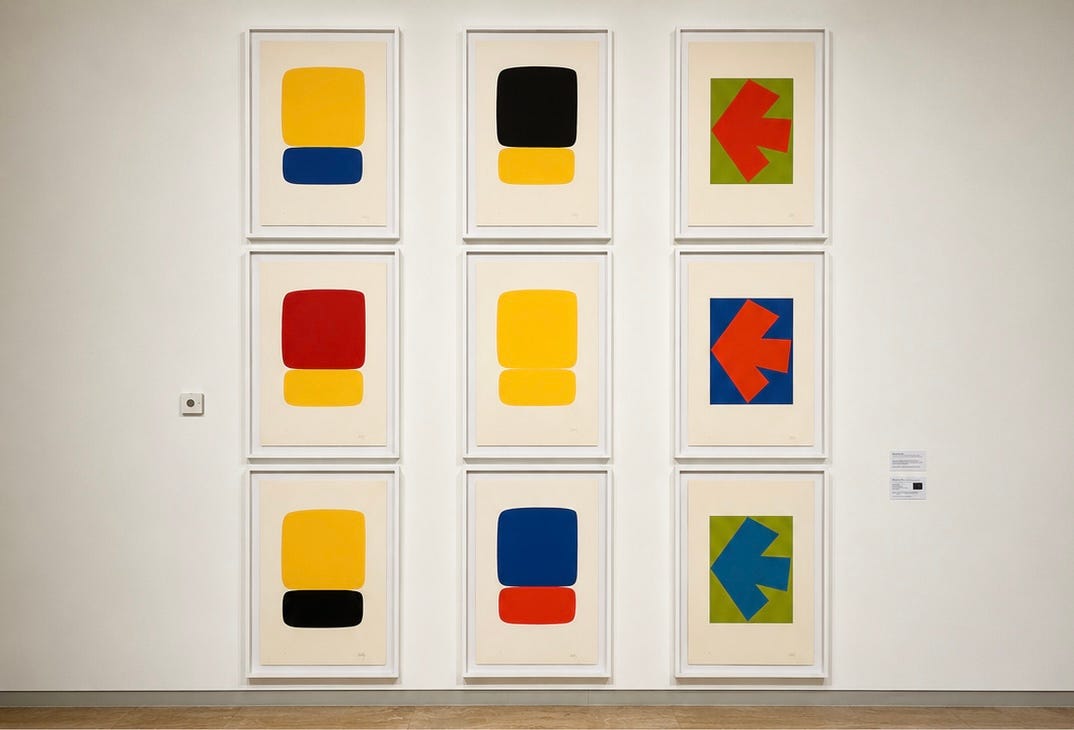
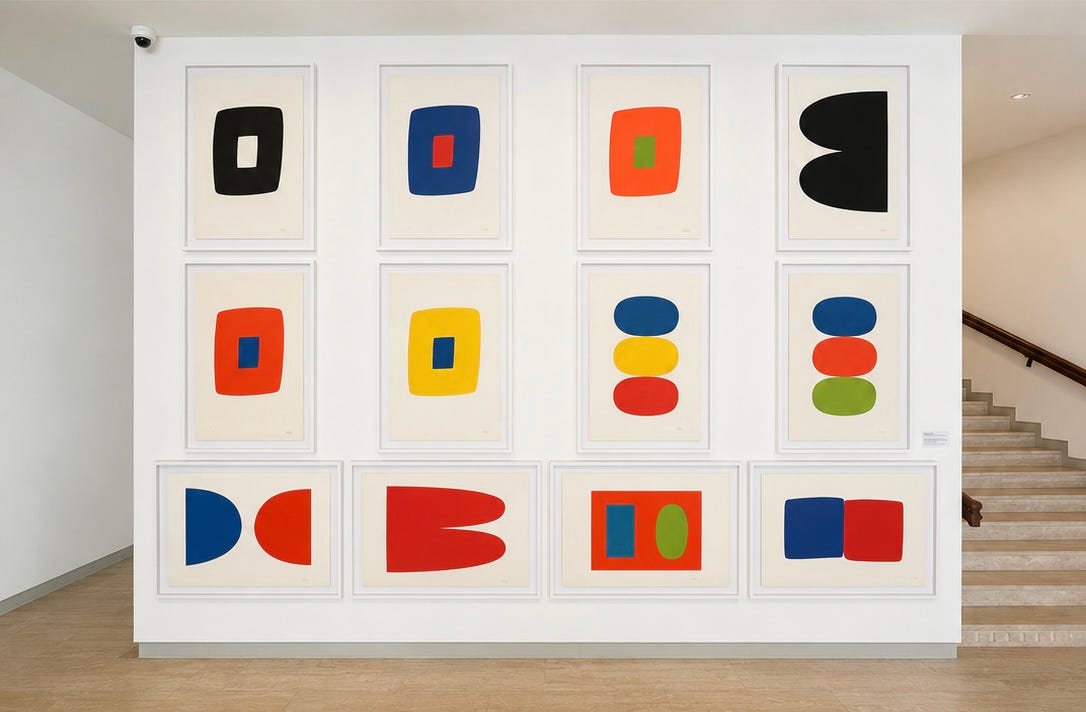
The Suite of Twenty-Seven Color Lithographs was made in 1964–65. The complete series consists of twenty-seven lithographs, published by Maeght Éditeur in Paris. In the edition, Kelly repeatedly employs related abstract forms while changing their color combinations and relationships (Fig. 6 & 7). The simplicity is almost radical. A red rectangle sits above a yellow one. A black form meets a yellow one. Orange confronts blue. The forms have rounded edges and irregular contours, but they remain remarkably controlled. There is no modeling, no illusionistic depth and almost no suggestion of a traditional pictorial space. And yet the works do not feel static. The same shape can feel heavier, lighter, warmer, cooler, more aggressive or more subdued simply because of the color placed beside it.
This is where seeing the works together becomes so important. The suite is not merely a collection of twenty-seven independent images but a laboratory of visual relationships. Furthermore, Kelly is not using printmaking simply to make small reproductions of paintings. The lithograph becomes an independent medium through which he can investigate the same fundamental concerns that occupy his paintings, color, contour, proportion, repetition and the relationship between figure and the space around it.
One of the striking things about encountering the suite today is how little it seems to belong to 1964. The vocabulary is extraordinarily economical. There is no unnecessary information, a shape is a shape, a color is a color, but the apparent simplicity conceals a sophisticated understanding of perception. Kelly understood that our experience of a color depends upon what surrounds it. A yellow shape against blue does not behave like the same yellow against black or red. Likewise, the rounded geometry of one form can suddenly appear heavier or more dynamic when placed next to another. The works therefore operate somewhere between painting, design and sculpture. They have the physical clarity of objects while remaining images on paper.
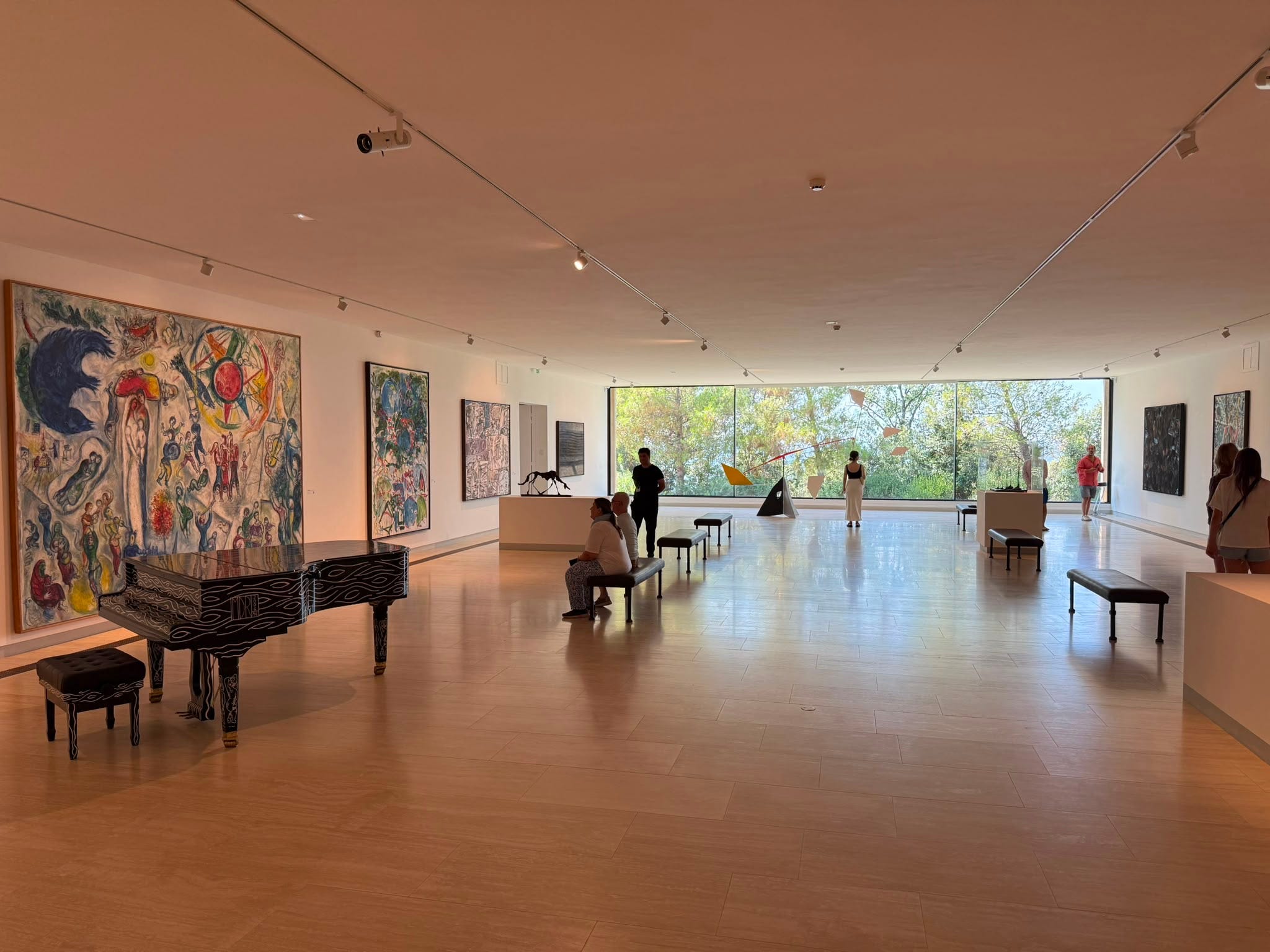
The Kelly lithographs also provide an excellent entry point into the broader permanent collection of the Fondation. Walking through the building, one encounters a remarkable concentration of artists who, in different ways, challenged the traditional boundaries of painting and sculpture at the time: Giacometti, Miró, Calder, Dubuffet, Kandinsky to name a few (Fig. 8). Kelly belongs naturally within this group, but he also occupies a distinctive position. Where Giacometti investigates the human figure and its relationship to space, and Miró transforms organic forms into an almost dreamlike visual language, Kelly reduces his vocabulary even further, contour, color and form.
Perhaps the most interesting thing about seeing the Suite of Twenty-Seven Color Lithographs at the Fondation Maeght is that they make Kelly’s work feel less like an exercise in geometric abstraction and more like an investigation into how little an artist needs in order to create a completely convincing visual experience. That is what makes the suite so compelling. The individual lithographs are quiet, almost austere objects. Together, however, they reveal Kelly’s fascination with variation; how a fixed vocabulary can produce seemingly infinite visual possibilities.
And in the context of the Fondation Maeght, an institution itself conceived as a meeting point between art, architecture, landscape and artists, the suite feels particularly appropriate. Kelly did not merely make work for the Maeght. He became part of the artistic language that the Maeghts were building.
For available works by Ellsworth Kelly click here:
Thanks for reading! Subscribe here to receive Artxiom in your inbox: