

Weekly writing about the art market and the convergence of art and technology. By day, I’m a partner at the Robert Fontaine Gallery and a data science consultant. By night, I write Artxiom, ideas at the intersection of art, technology, and finance.
If you haven’t subscribed, join today by subscribing here:
Exceptional Works: Friedel Dzubas
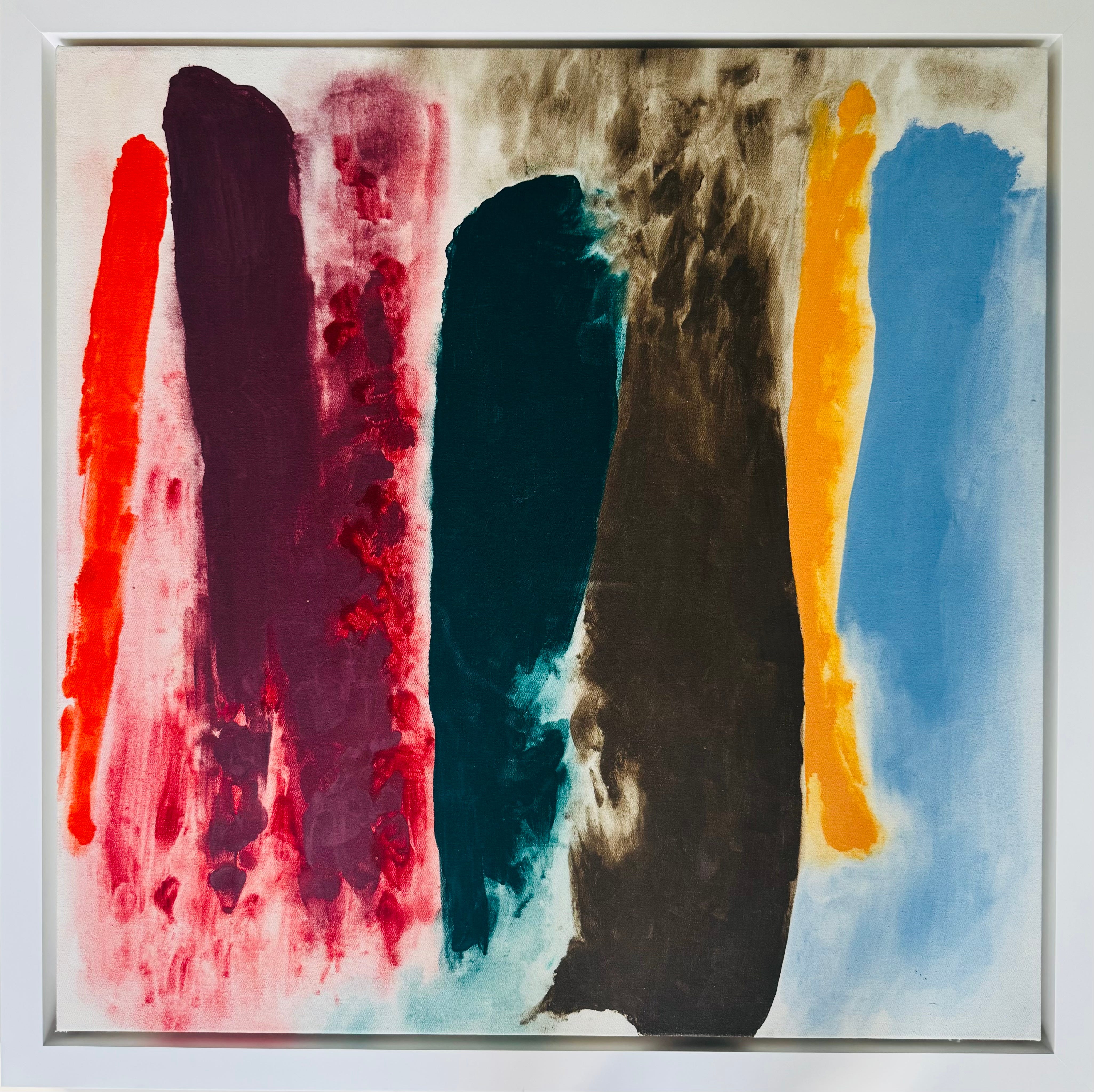
Friedel Dzubas
Red Mesa End, 1975
Magna Acrylic on Canvas
40 x 40 inches
Signed, Dated and Titled on reverse
Provenance:
-Gallery 99, Bal Harbor FL
In the mid-1970s, the German-born American painter Friedel Dzubas was producing some of the most confident and refined works of his career. A leading figure associated with the second generation of Abstract Expressionism and later with the Color Field Movement, Dzubas developed a distinctive style built on large atmospheric color forms and fluid staining techniques. Paintings from around 1975 represent a mature phase in his work, where bold color relationships and simplified structures dominate the canvas.
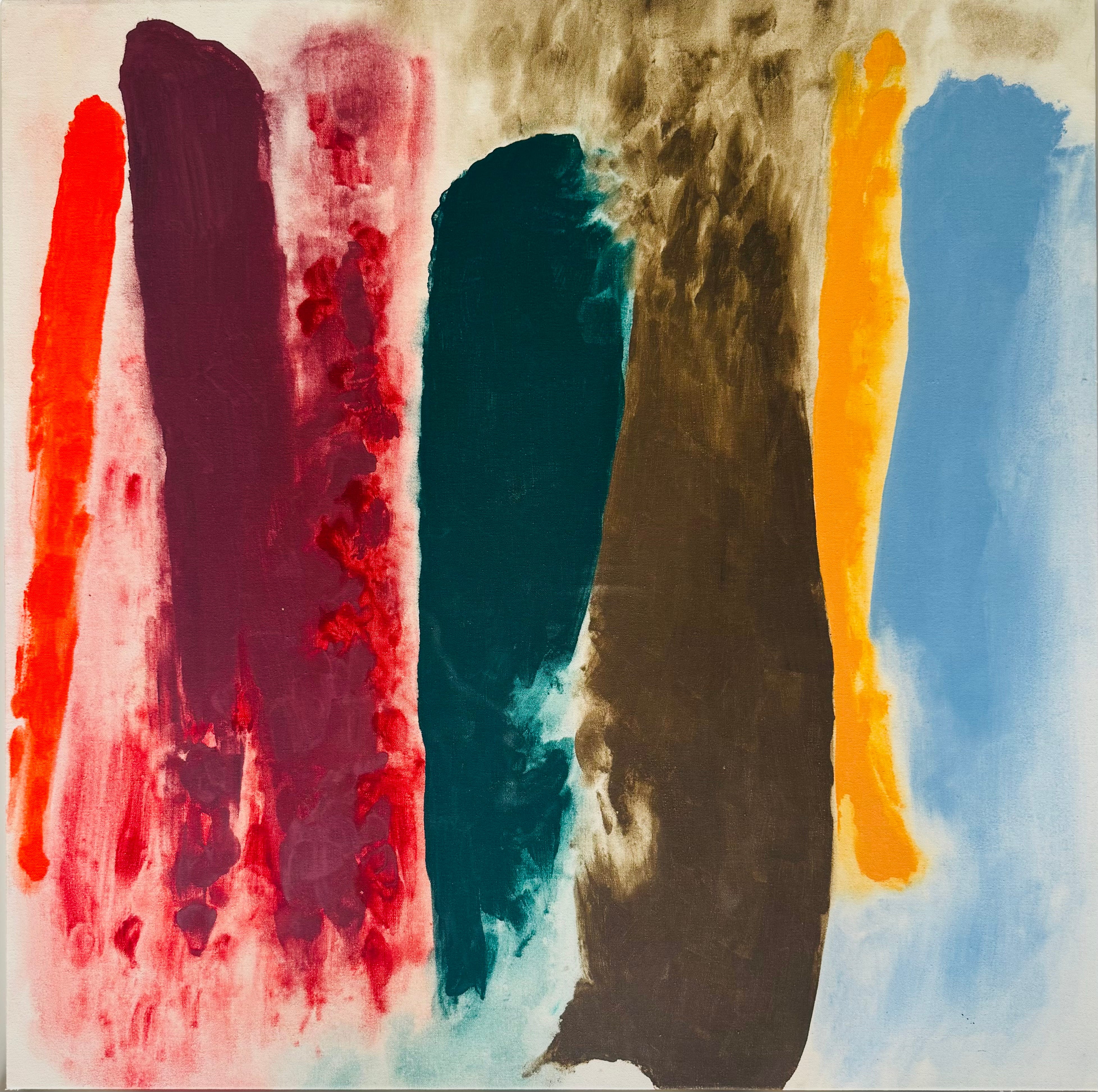
Red Mesa End, 1975 is organized through a sequence of vertical color passages that move rhythmically across the surface (Fig. 2). Rather than forming rigid shapes, the colors appear as soft columns that breathe into the surrounding canvas. The composition presents a progression of colors including: orange-red, burgundy, red, teal-green, brown, yellow, and blue. This arrangement creates the sense of standing pillars of color, each interacting with the others through contrast, transparency, and scale. Red Mesa End, 1975 achieves its power through a careful balance of visual forces. The deep green-teal shape near the center acts as a pivot point, drawing the viewer’s eye inward. Next to it, the large brown form provides a sense of weight and grounding. In contrast, the pale blue field at the right side opens the composition, giving the work a feeling of lightness and space. These contrasts, warm against cool, dense against translucent, narrow forms against wide masses, create a rhythmic tension that drives the painting. Rather than delineating rigid shapes, Dzubas allows the edges of these forms to dissolve softly into the surrounding canvas. The resulting transitions create a subtle interplay between presence and diffusion, as if the colors were slowly emerging from or dissolving into the surface.
A defining aspect of Dzubas’s practice is his distinctive staining technique. Working primarily with diluted acrylic pigments, the artist applied paint directly onto the canvas surface, allowing it to soak into the fabric. This method produced soft transitions, feathered edges, and luminous layers of color that appear embedded within the material of the canvas itself. This approach places Dzubas in dialogue with other painters associated with Color Field, including Helen Frankenthaler and Morris Louis, who similarly explored the expressive potential of staining and poured paint. Like those artists, Dzubas was less interested in gesture and brushstroke than in the emotional and spatial effects created by color itself.
By 1975, Dzubas had already established himself as an important figure in American abstraction. His work had been exhibited at major institutions such as the Museum of Modern Art and the Whitney Museum of American Art. During this period his paintings became increasingly monumental, often featuring fewer but more powerful color forms arranged across expansive canvases. Rather than the dramatic gestures associated with early Abstract Expressionism, Dzubas pursued a quieter and more atmospheric approach. His paintings from this time emphasize color relationships, spatial openness, and subtle movement within the painted surface.
Today, works from the mid-1970s are often considered among Dzubas’s strongest and his most accomplished achievements. They demonstrate a confident mastery of color and composition, combining emotional intensity with remarkable restraint. In paintings like Red Mesa End, 1975, color becomes both subject and structure. The vertical forms do not depict objects or landscapes; instead, they create an immersive experience in which color itself becomes the language of the painting. Ultimately, the painting stands as a compelling example of the lyrical abstraction that defined Friedel Dzubas’s mature style.
For more information inquire below:
Thanks for reading! Subscribe here to receive Artxiom in your inbox each week: