

Weekly writing about the art market and the convergence of art and technology. By day, I’m a partner at the Robert Fontaine Gallery and a data science consultant. By night, I write Artxiom, ideas at the intersection of art, technology, and finance.
If you haven’t subscribed, join today by subscribing here:
Exceptional Works: Roy Lichtenstein
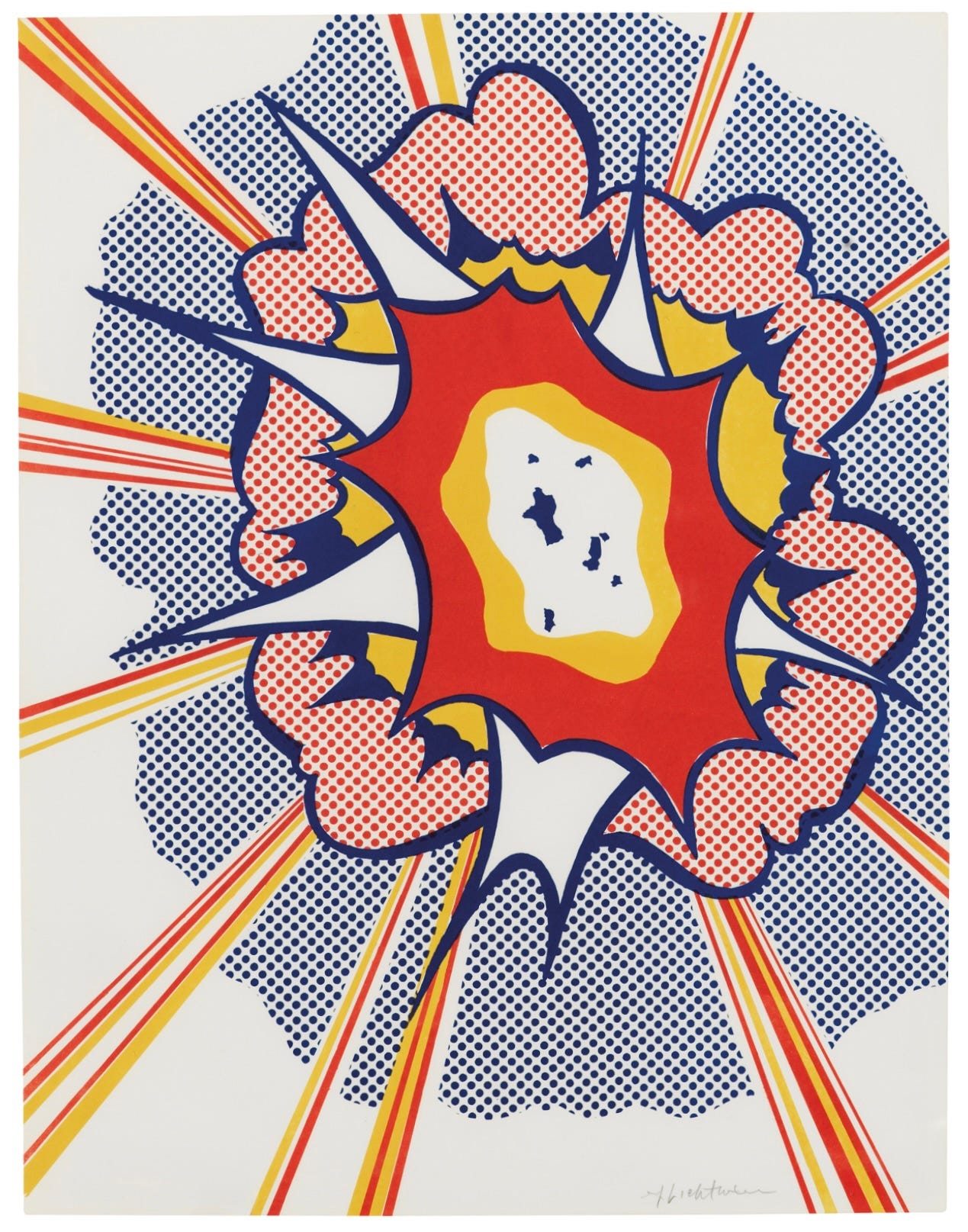
“Pop Art looks out into the world. It doesn’t look like a painting of something, it looks like the thing itself.”
- Roy Lichtenstein
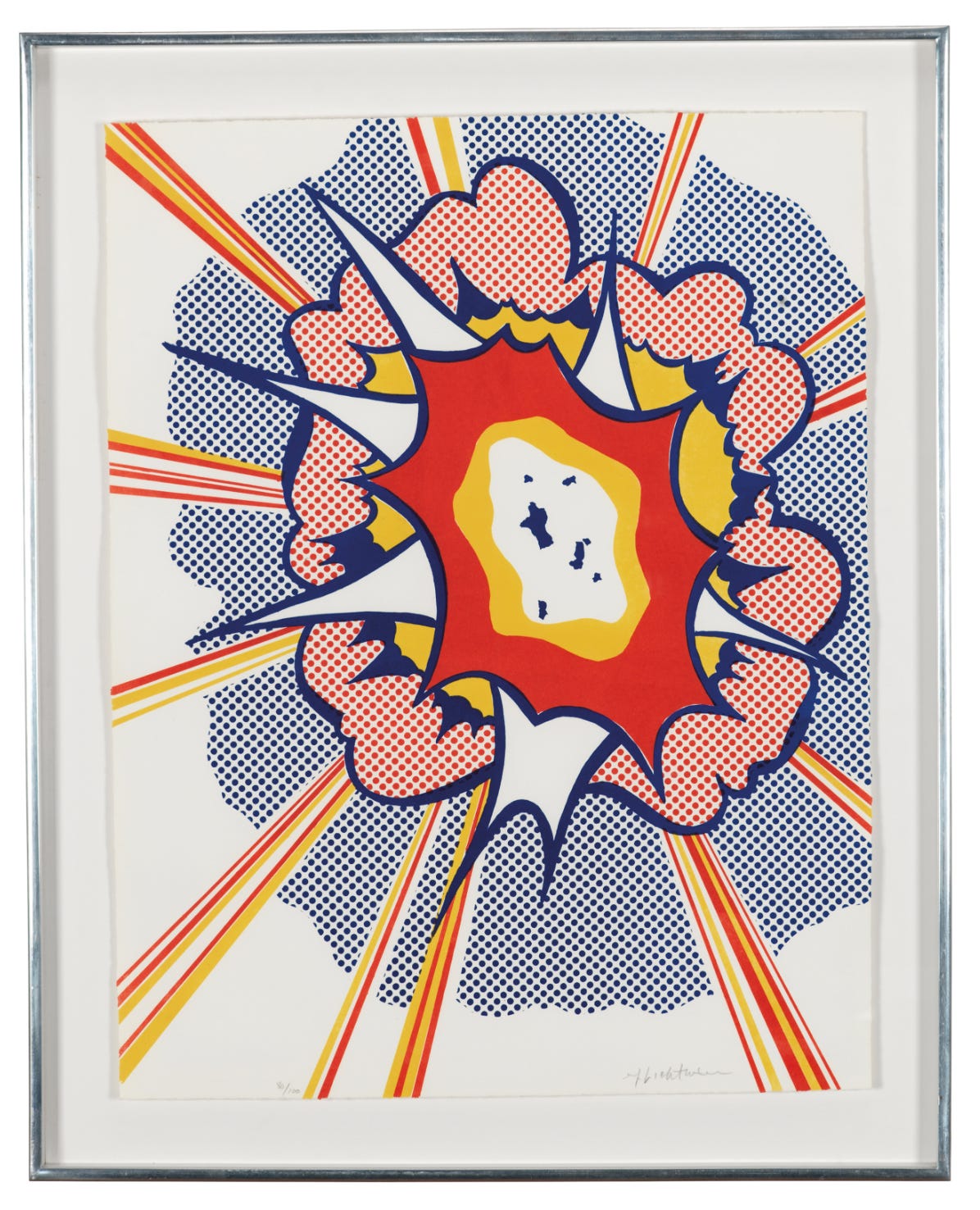
Roy Lichtenstein (1923-1997)
Explosion, from Portfolio 9
Lithograph in colors, on Rives paper, signed and numbered in pencil
Published by Hollander Workshop, New York, with their blindstamp
Sheet: 22 x 17 in.
1967
Roy Lichtenstein’s Explosion (1967) is a vibrant, color lithograph that exemplifies his signature Pop Art style, drawing directly from the explosive imagery of 1950s and 1960s American war comics. The print features concentric bursts of red, yellow, and blue rings overlaid with ben-day dots, which were Lichtenstein’s hallmark technique mimicking comic book printing. At the center, a chaotic swirl of debris evoking the dramatic climaxes of comic panels. The work is more than a stylistic exercise; it is a commentary on violence, media sensationalism, and the desensitization caused by cartoonish depictions of war during the escalating Cold War and the Vietnam era.
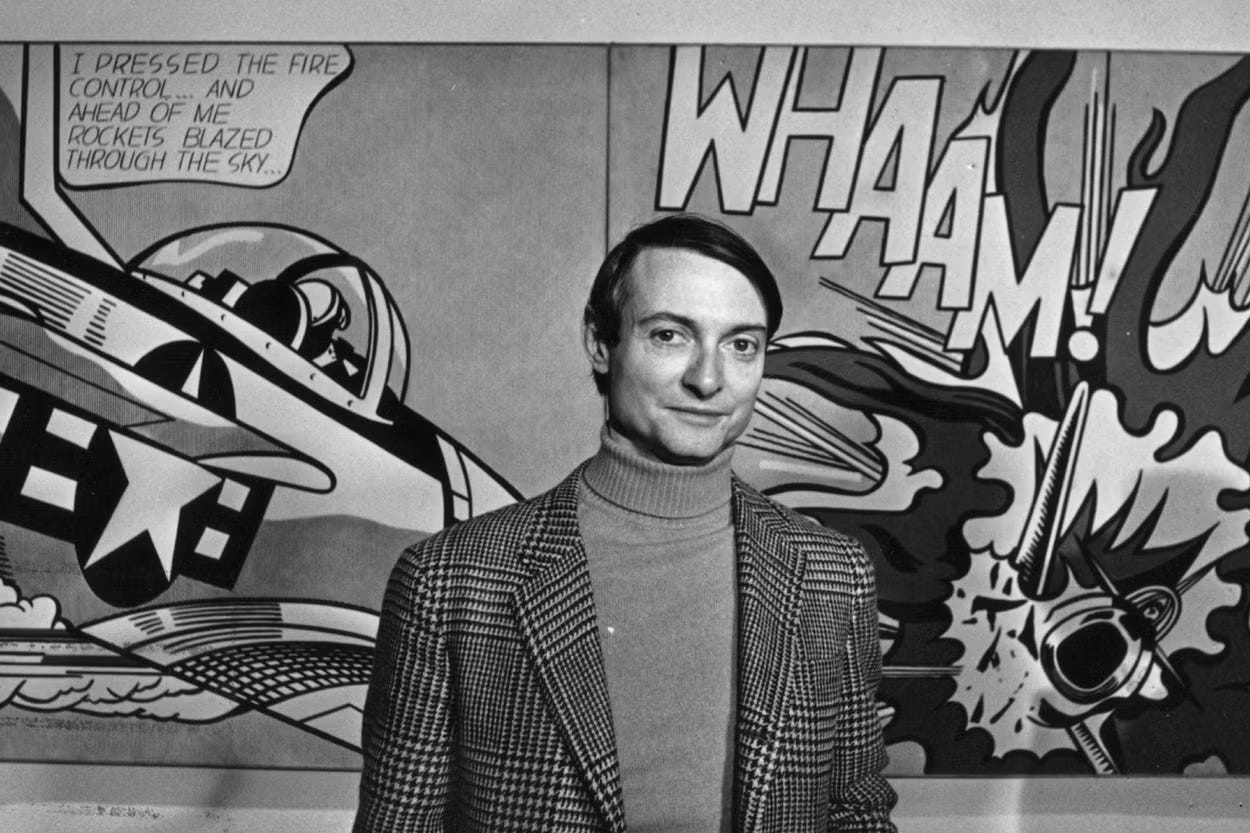
Roy Lichtenstein, born in 1923 in New York City, rose to prominence in the early 1960s as a leading figure in the Pop Art movement, alongside artists like Andy Warhol and Tom Wesselmann. His breakthrough came from appropriating mass media imagery, particularly comics, to critique the commodification of culture and the blurred line between fine art and popular entertainment. By 1961, while teaching at Douglass College, he had begun enlarging comic strips using an opaque projector, transforming banal panels into monumental canvases and inserting cartoon visuals into fine art context.
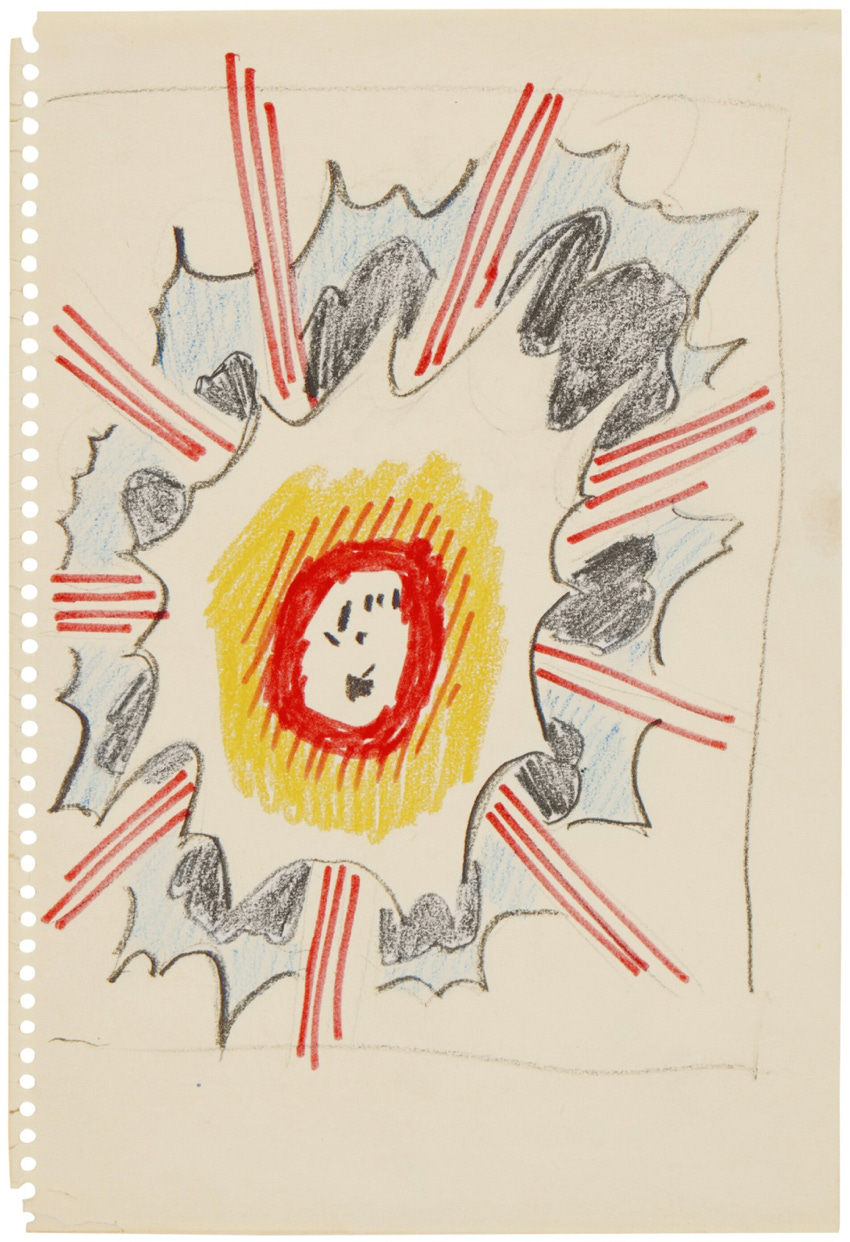
In the 1960s, Roy Lichtenstein began borrowing images of explosions from popular war comics and started using them in his paintings. (Fig. 4) He was interested in the way dynamic events like explosions were depicted in the stylised format of cartoon illustrations. This fascination reflected his broader Pop Art mission to elevate commercial and mass-produced imagery to the status of fine art.
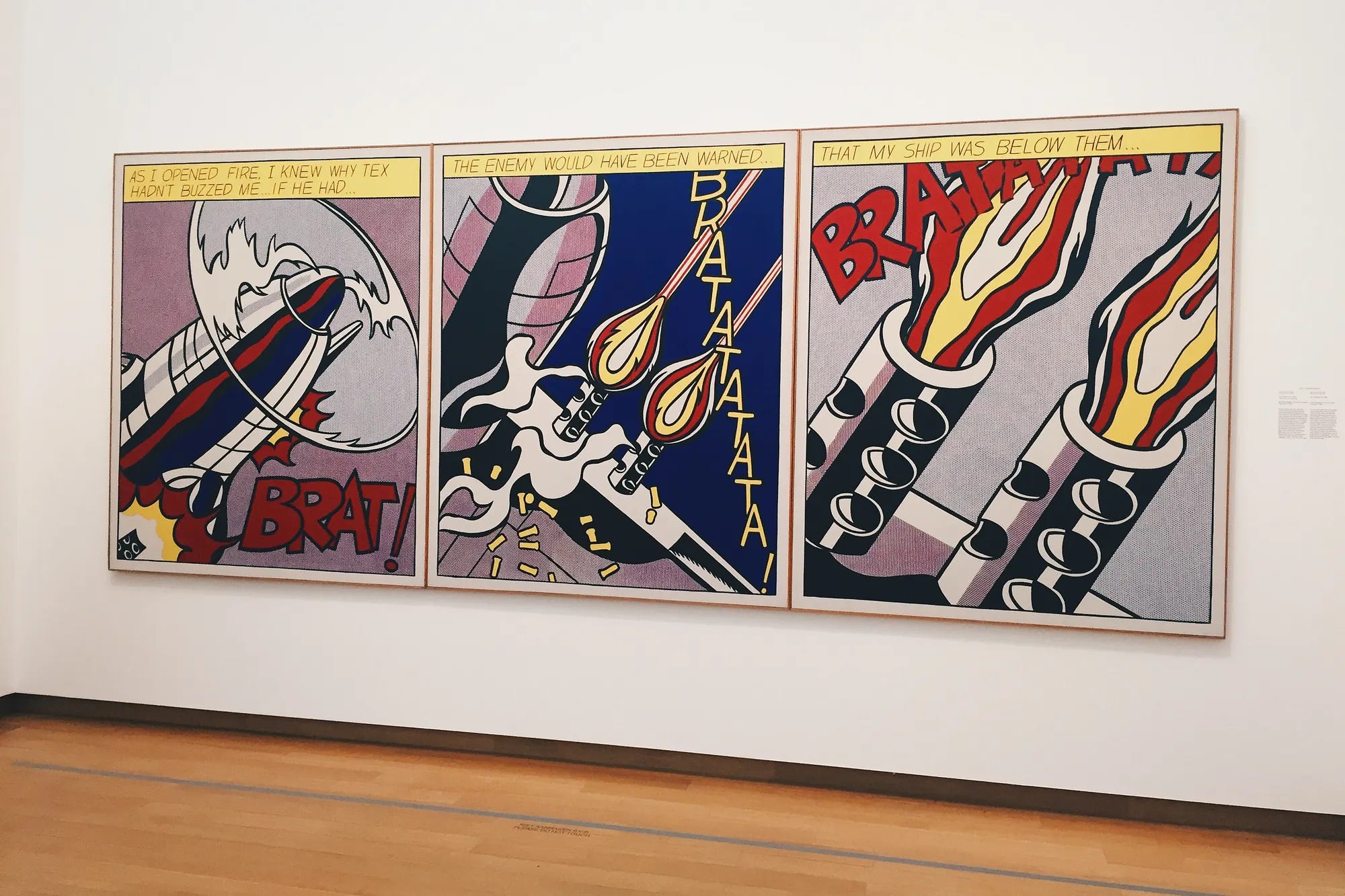
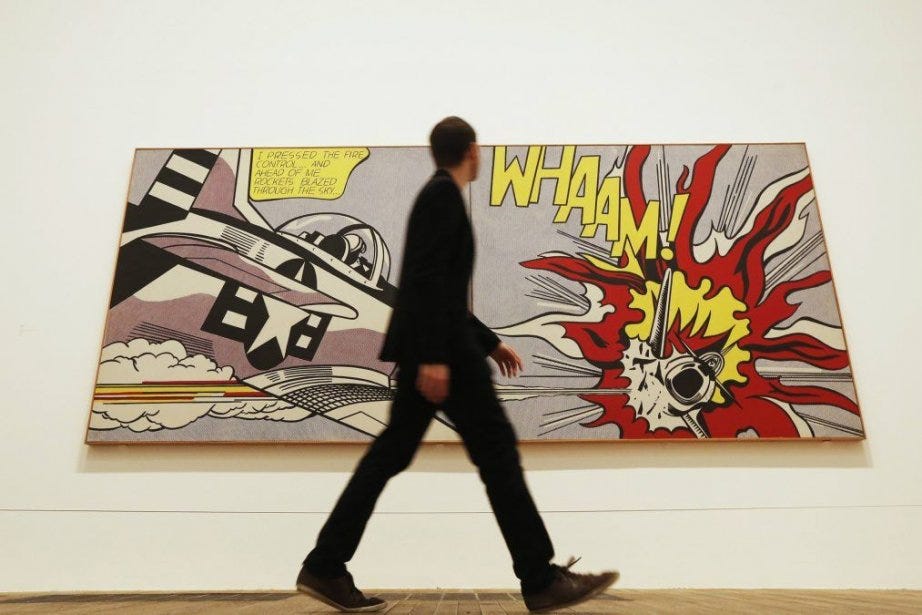
Explosion (1967) stems from his comic art phase, when Lichtenstein was fixated on war-themed comics. The image is adapted from a 1962 panel in Star Jaws #122, originally illustrating a fighter plane’s demise amid aerial combat. Similar motifs appear in his earlier paintings like Whaam! (1963), (Fig. 3), acquired by the Tate Modern, London, and As I Opened Fire... (1964) (Fig. 5), hosted today at the Stedelijk Museum’s permanent collection in Amsterdam. These works nod to Lichtenstein’s own military service in World War II (1943–1946), where he created engineering drawings in the Army Air Force. Explosion (1967) conveys Lichtenstein’s striking formal vocabulary and represents a quintessential example of how Pop Art challenged traditional distinctions between fine art and comercial art while simultaneously engaging with serious contemporary issues through the lens of mass media imagery. The work subtly indicts how comics glamorized violence, turning real geopolitical horror into spectacle. Its explosive form, vibrant yet detached, mirrors the media’s role in numbing public response.
Explosion (1967) was created as part of Portfolio 9, a collaborative suite of nine lithographs organized by the innovative Hollander Workshop in New York . This portfolio, introduced by Una E. Johnson of the Brooklyn Museum, brought together heavyweights like Willem de Kooning, Sam Francis, Ellsworth Kelly, Robert Motherwell, Louise Nevelson, Henry Pearson, Saul Steinberg, and Richard Lindner. The collaboration was a landmark in fine art printmaking, emphasizing lithography’s potential for bold, reproducible imagery.
The print’s bold primary colors and mechanical precision challenge Abstract Expressionism’s emotional spontaneity, positioning Pop Art as a cooler, more analytical response to postwar consumer culture. As art historian Mary Lee Corlett notes in “The Prints of Roy Lichtenstein: A Catalogue Raisonné 1948–1993”, this era marked Lichtenstein’s shift toward prints as a democratic medium, making his ironic critiques accessible beyond gallery walls.
Since entering the secundary market around 2003, the print has demostrated a steady appreciation (20% average annual appreciation since 2008), reflecting broader strength in Lichtenstein’s print market amid sustained Pop Art demand. Its comic book explotion motif excecuted with the signature ben-day dots and bold primary colors appeals to collectors seeking iconic works from his 1960s war comic phase. Furthermore, the scarcity of the print (only 100 signed and numbered impressions plus 10 artist’s proofs and 20 printer’s proofs) has enhanced its collectibility. In today’s market, Explosion (1967) estimated value is between $38,000 and $57,000, and its most recent auction record is $57,877 achieved in June, 2025.
Explosion (1967) is held in prestigious collections like MoMA, the National Gallery of Art, and Tate Modern. It has been featured in retrospectives such as “Roy Lichtenstein: A Retrospective of Prints, 1962–1971” (Berggruen Gallery, 1971) and “Masterworks of Lithography” (Museum of Fine Art Houston, 2005). Its legacy endures as a bridge between comic ephemera and critique, proving Pop Art’s lasting power in dissecting American history.
For more information inquire below:
Thanks for reading! Subscribe here to receive Artxiom in your inbox each week: