

Weekly writing about the art market and the convergence of art and technology. By day, I’m a partner at the Robert Fontaine Gallery and a data science consultant. By night, I write Artxiom, ideas at the intersection of art, technology, and finance.
If you haven’t subscribed, join today by subscribing here:
Keith Haring’s Signed Ephemera: Activism, Accessibility, and the Democratization of Art

Keith Haring is best remembered for his bold paintings, subway drawings, and internationally recognized imagery. Yet some of the most revealing objects from his career were never intended to hang in museums. Signed posters, invitation cards, exhibition announcements, and Pop Shop postcards occupy a unique place within Haring’s body of work, illustrating his conviction that art should exist beyond the confines of galleries and private collections.
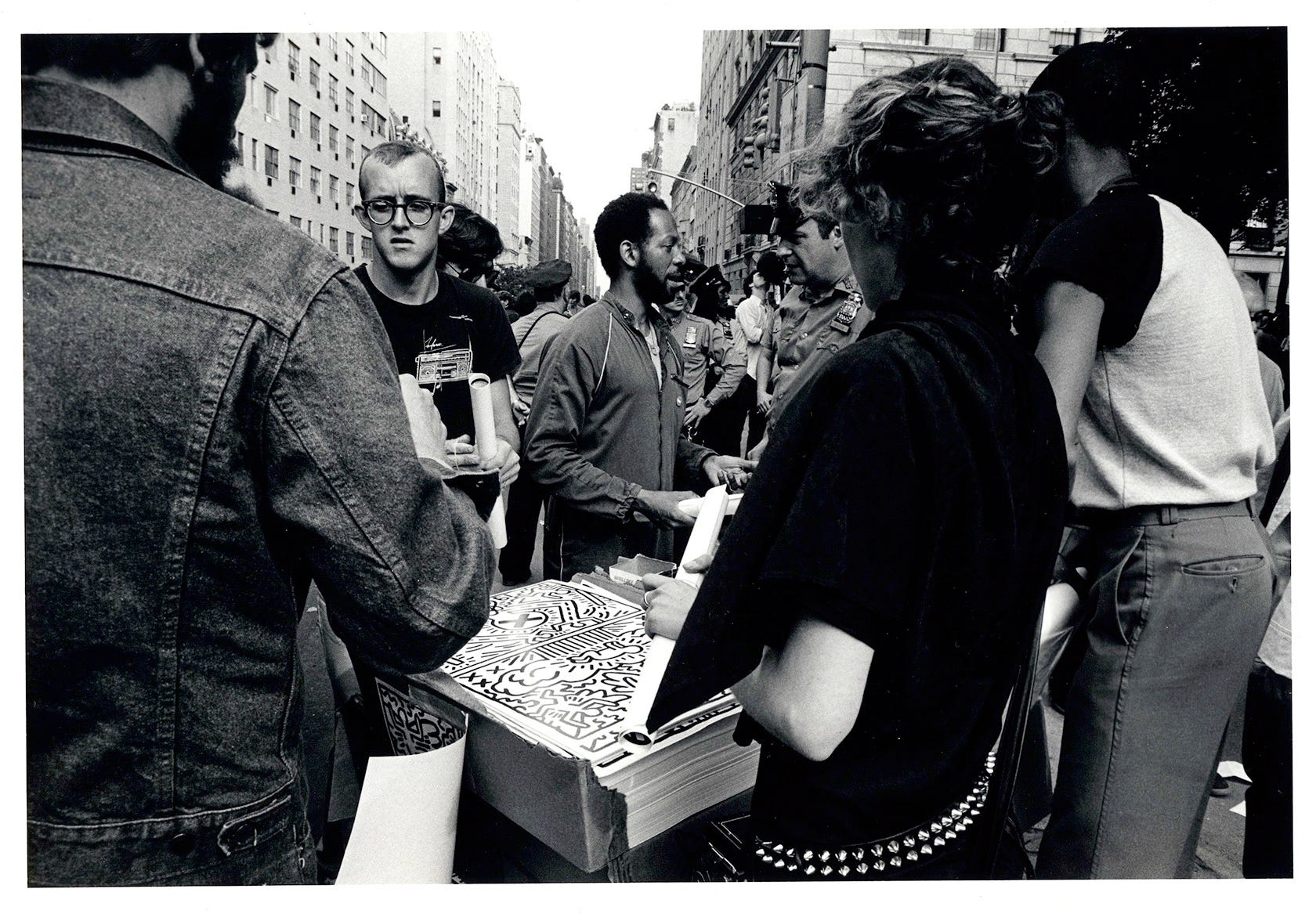
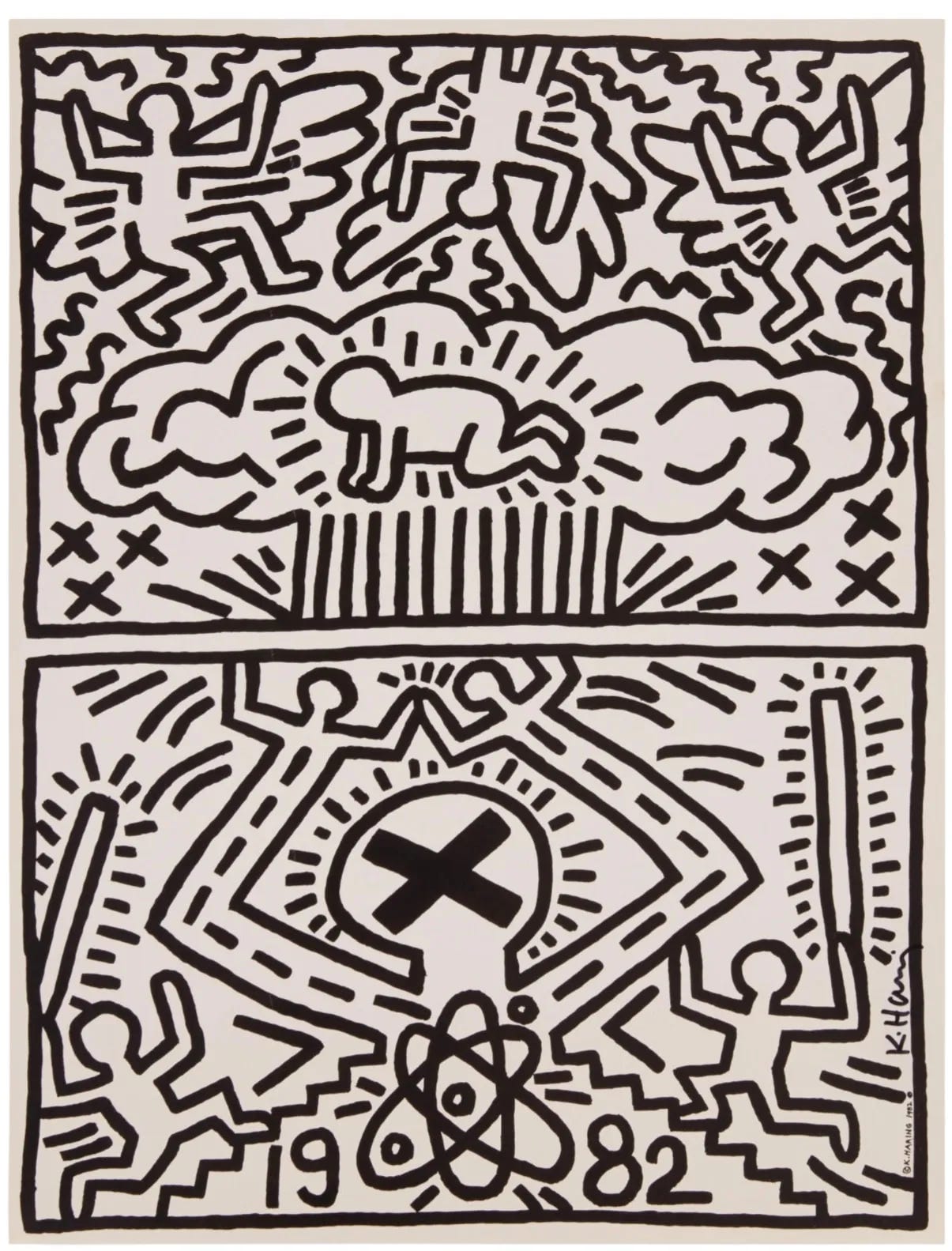
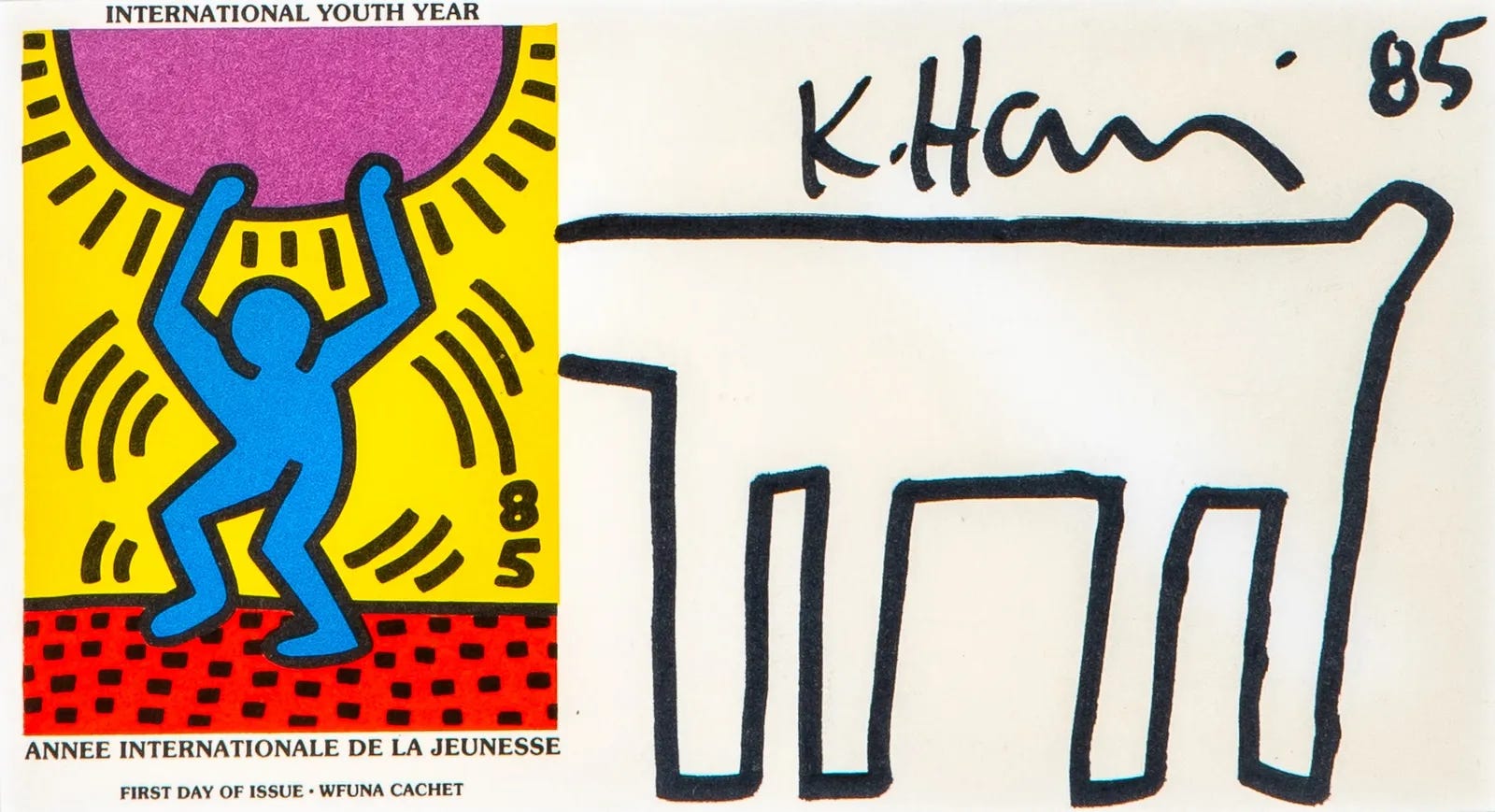
Among the most significant examples are posters produced for political and social causes. Haring designed and self-published his first activist poster in 1982, titled “Poster for Nuclear Disarmament”, in support of the Anti-Nuclear rally in New York (Fig. 2 & 3), transforming a public demonstration into a work of visual activism. When signed by the artist, these posters become more than campaign materials; they embody Haring’s belief that artists should actively participate in civic life. Likewise, signed invitation postcards created in connection with the United Nations for the International Youth Year in 1985 reflect his engagement with global issues and humanitarian ideals (Fig. 4). These pieces blur the distinction between art objects and historical documents, preserving moments when artistic expression and political advocacy became inseparable.
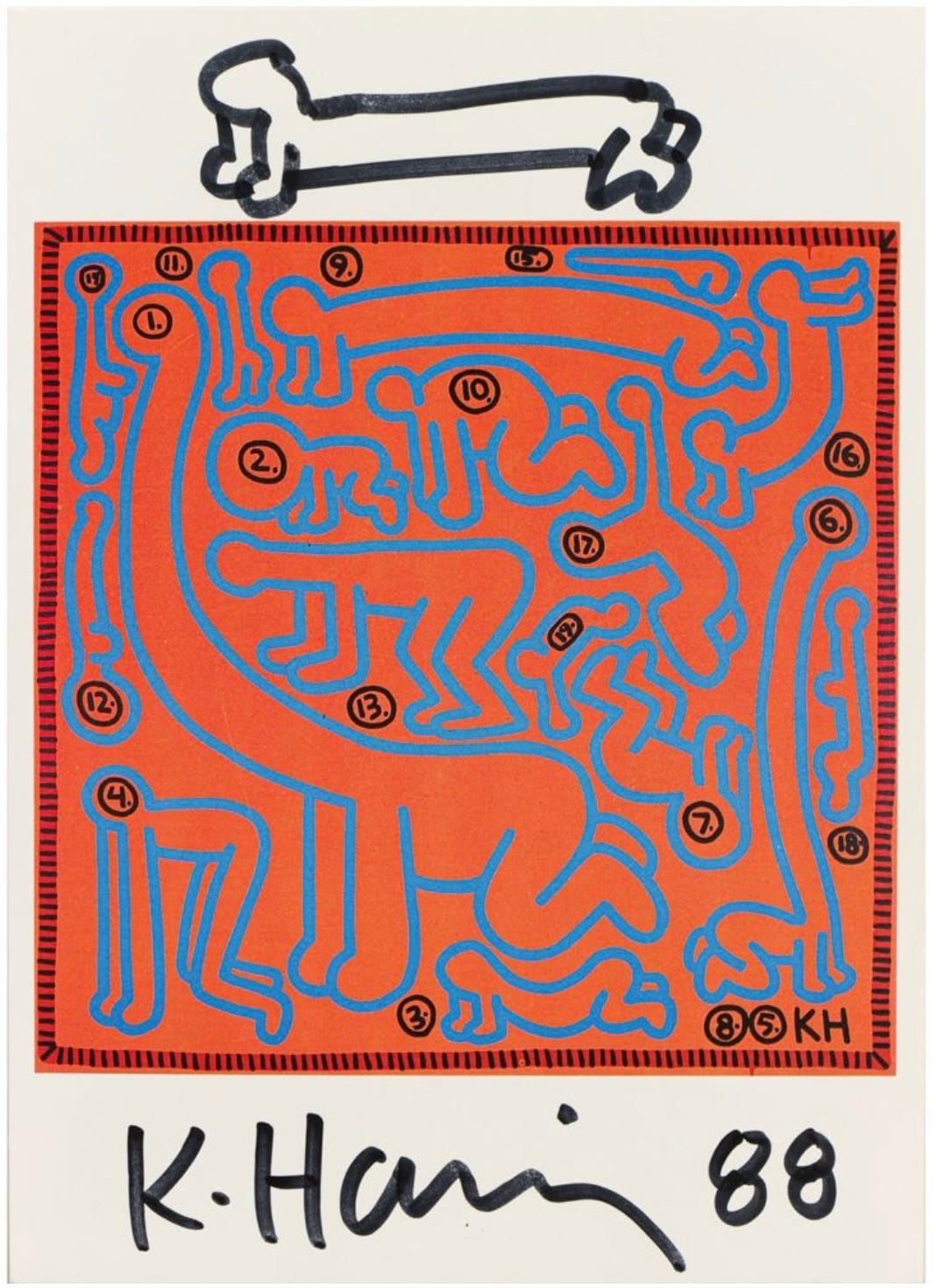
Haring’s commitment to accessibility extended beyond activism and into his commercial ventures. The Pop Shop, which opened in SoHo in 1986, was conceived as an extension of his artistic philosophy rather than merely a retail store. Visitors could purchase affordable posters, postcards, buttons, T-shirts, magnets, and other objects bearing his instantly recognizable imagery. By occasionally signing these inexpensive items, Haring transformed everyday printed materials into personal works without stripping them of their democratic spirit. For instance, (Fig. 5), a signed Pop Shop postcard with a unique drawing on it remained fundamentally a postcard, an object designed to be owned, handled, and enjoyed by ordinary people rather than reserved exclusively for elite collectors.
This approach challenged long-standing assumptions about artistic value. In a market increasingly defined by rarity and exclusivity, Haring embraced reproducibility. He understood that a printed poster or postcard could communicate his ideas just as effectively as a unique painting. His signature did not elevate these objects by distancing them from the public; rather, it reinforced the notion that meaningful art could exist in formats that were affordable and widely available.
These signed ephemera also document the breadth of Haring’s social engagement. Whether advocating for social and political causes, supporting international organizations, promoting exhibitions, or simply welcoming visitors into the Pop Shop, Haring consistently used printed media as a vehicle for communication. Each object reflects his desire to collapse the barriers separating art, politics, commerce, and everyday life.
Today, collectors increasingly recognize signed posters, postcards, invitations, and other ephemeral materials as significant works in their own right. They offer an intimate connection to Haring’s practice, preserving the immediacy of his public voice while embodying one of his most enduring principles: that art should be accessible, participatory, and shared as widely as possible.
Rather than viewing these signed ephemera as secondary to Haring’s paintings or editions, they should be understood as central expressions of his artistic mission. They demonstrate that for Haring, democratizing art was not simply an abstract ideal but a practice carried out through the very objects people could afford to take home. In doing so, he left behind a body of work that continues to remind us that art can be both culturally significant and universally accessible.
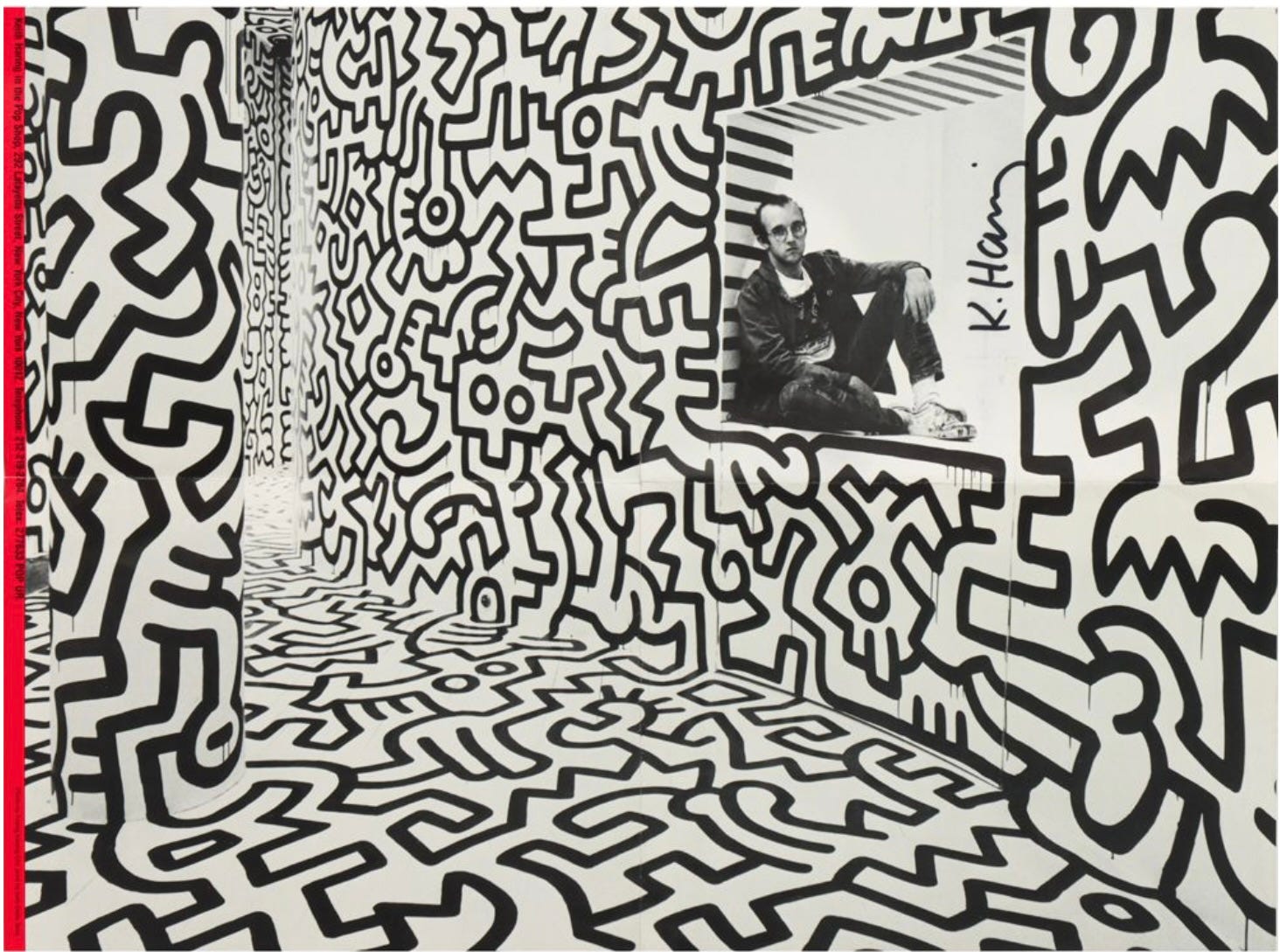
Recent solo exhibitions of Keith Haring's work have been held at the Stedelijk Museum in Amsterdam in 2023, the National Gallery of Victoria in Melbourne in 2020, the Tate Liverpool in 2019, the Albertina in Vienna in 2018, the De Young Museum in San Francisco in 2014, the Musée d'Art Moderne de la Ville de Paris in 2013, the Museum of Contemporary Art in Lyon, France in 2008, and at the Fundación Caixa Galicia in Ferrol, Spain in 2007. He also had exhibitions in major institutions such as the Guggenheim Museum in New York, the Museum Boijmans van Beuningen in Rotterdam, and the Kunsthalle in Cologne. His works can be found in the collections of The Museum of Modern Art in New York, the Los Angeles County Museum of Art, the Art Institute of Chicago, and the Smithsonian American Art Museum in Washington, D.C. among others.
For more information about these works, inquire below:
Thanks for reading! Subscribe here to receive Artxiom in your inbox each week: