

Weekly writing about the art market and the convergence of art and technology. By day, I’m a partner at the Robert Fontaine Gallery and a data science consultant. By night, I write Artxiom, ideas at the intersection of art, technology, and finance.
If you haven’t subscribed, join today by subscribing here:
Ellsworth Kelly: At the Edge of Water
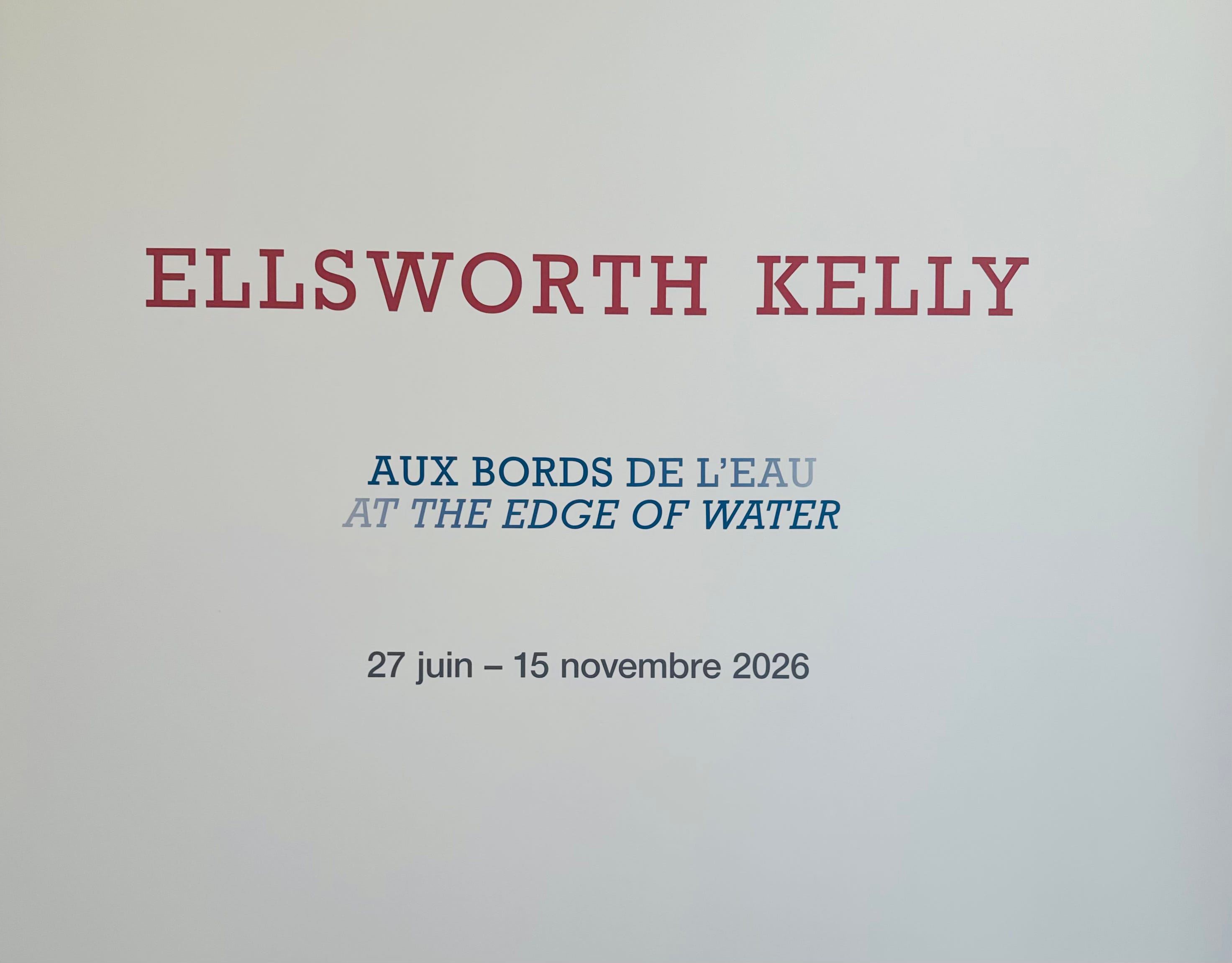
In 2026, more than sixty years after Kelly spent the summer of 1963 with the Maeghts, the foundation has returned to his work with a major solo exhibition, Ellsworth Kelly: At the Edge of Water, curated by Éric de Chassey. The presentation is so exceptional that it deserves a write-up of its own building on the previous article, Ellsworth Kelly at the Fondation Maeght (Part 1), which explored Kelly’s Suite of Twenty-Seven Color Lithographs, currently on view at the Fondation’s Permanent Collection wing. It runs from June 27 through November 15, 2026, and brings together more than one hundred works by the “American Matisse”, a nickname given to Kelly by art critic Jerry Saltz. At the Edge of Water is the first major exhibition to examine the role of water across Kelly’s practice as a central theme.
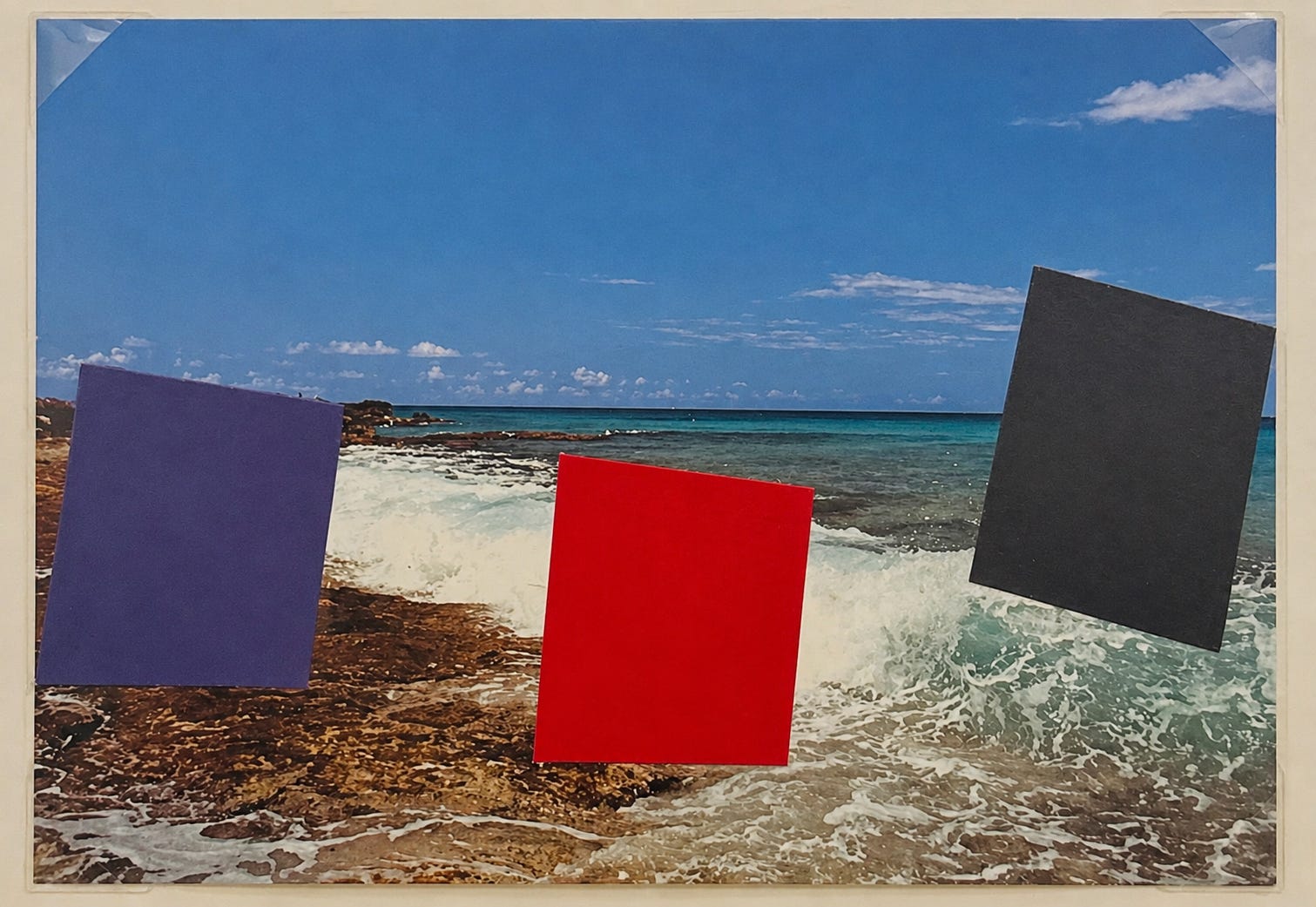
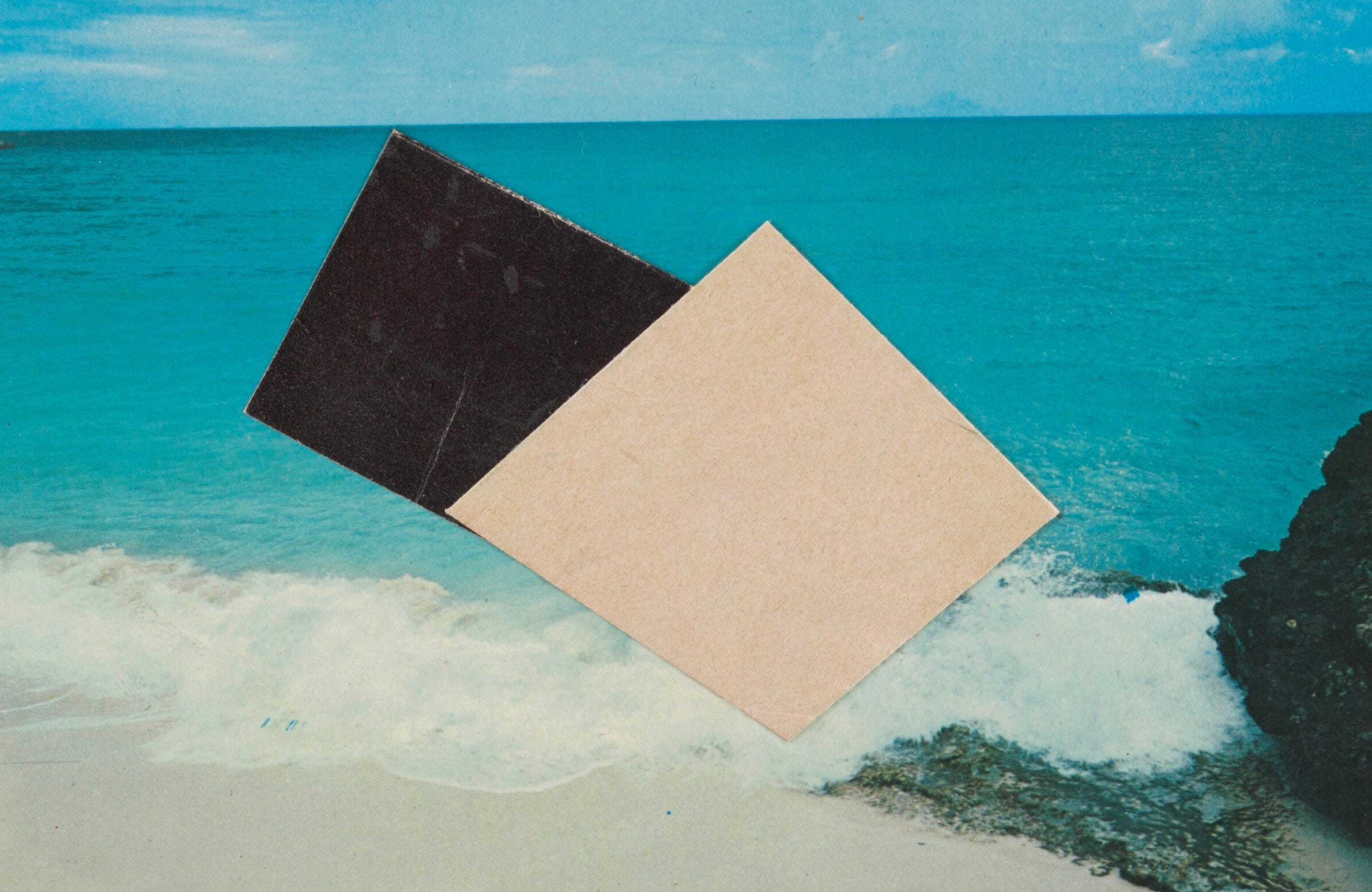
This is an intriguing premise because water is not what one normally associates with Kelly. We tend to think of his vocabulary in terms of hard edges, flat colors, geometric forms and radical simplicity. But the exhibition proposes another way of understanding those forms.
Throughout his life, Kelly was repeatedly drawn to bodies of water, from Belle-Île and the Côte d’Azur to New York and the Caribbean. What interested him was not landscape painting in the conventional sense, but the experience of looking; the shifting surface of water, reflections, light, color and the paradoxical relationship between a flat surface and an apparently infinite space. Water provided Kelly with precisely the kind of visual problem that fascinated him. It is simultaneously flat and spatial, boundless and defined by an edge.
The title, At the Edge of Water, therefore, feels particularly appropriate. The “edge” is exactly where Kelly’s practice often begins, the point where one visual condition meets another.
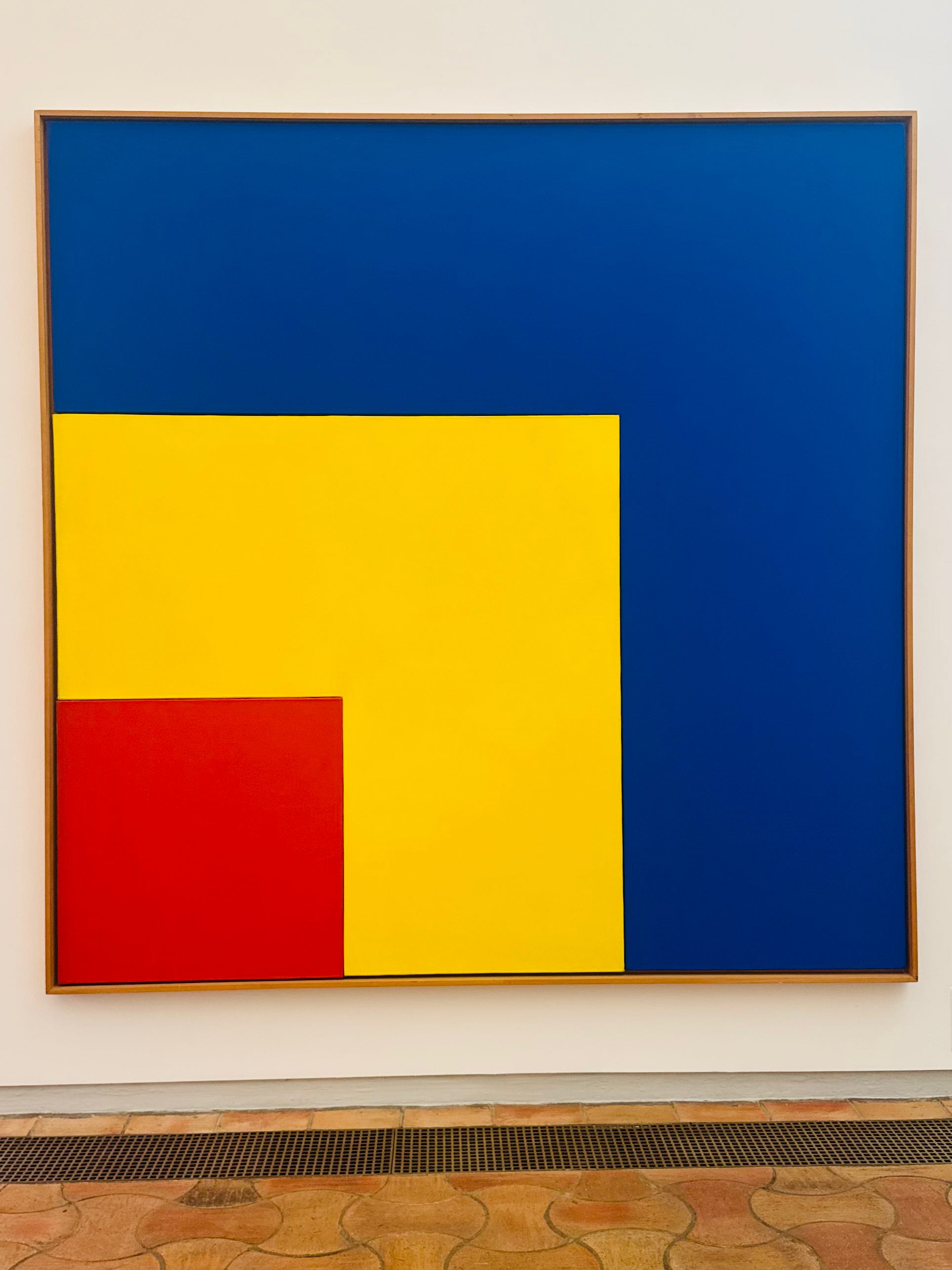
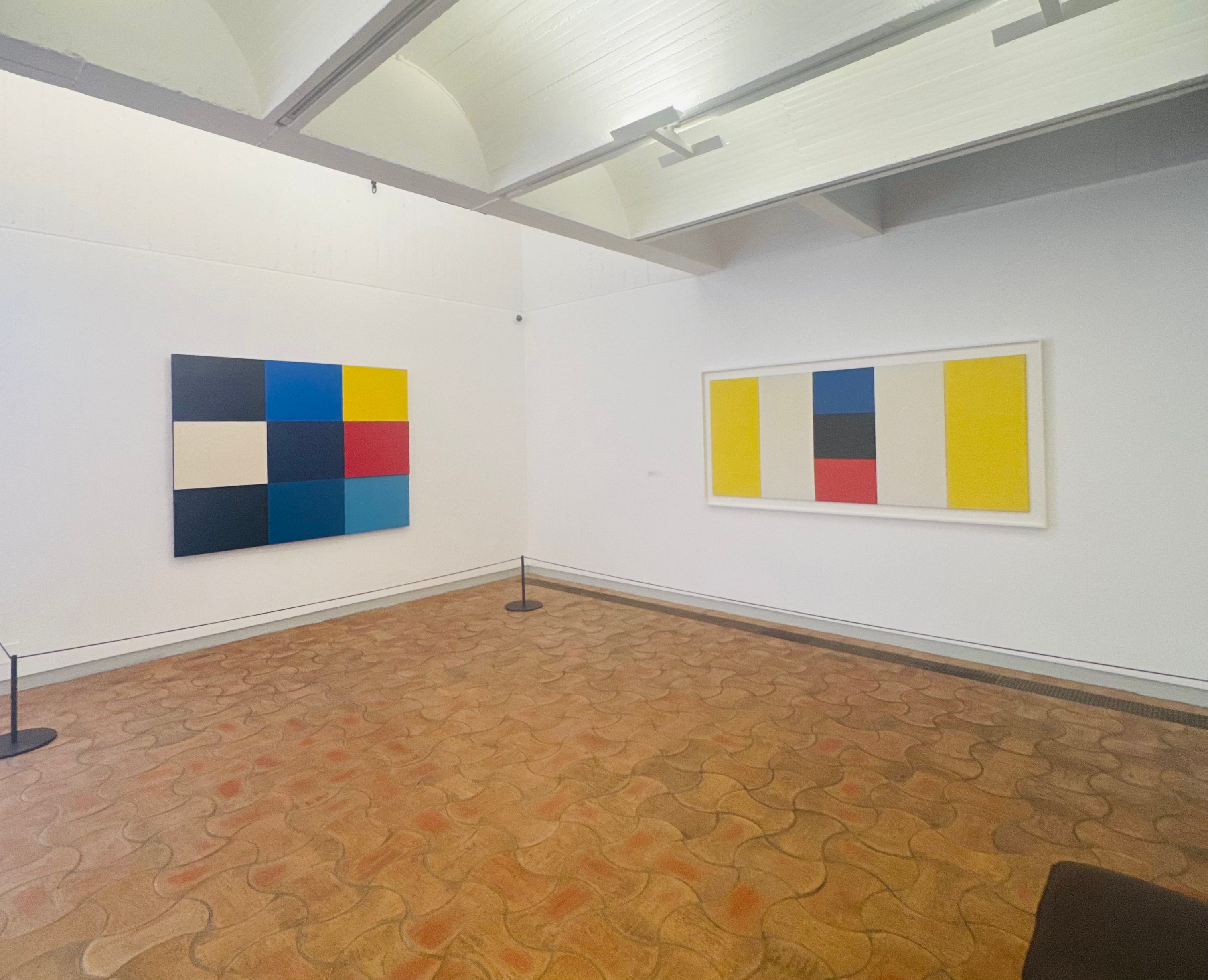
One of the most meaningful works to encounter in the exhibition is Red, Yellow, Blue, 1963 (Fig. 3). The painting belongs to the Fondation’s permanent collection, and its presence within the current Kelly presentation creates a remarkable historical loop. The work dates from the same period as Kelly’s summer with the Maeght family in Saint-Paul-de-Vence. It belongs to the moment when Kelly’s relationship with the Maeghts was becoming particularly close. The story of the painting is notably revealing because the colors were not arbitrary. Kelly later connected the red to the tomatoes in the Maeght garden, the yellow to the terracotta tiles of the courtyard, and the blue to the Provençal sky. It is a perfect example of Kelly's process, something encountered in the physical world gets transformed into an independent arrangement of color and form. Yet, within At the Edge of Water, the painting can also be reconsidered through the exhibition’s central argument that Kelly’s practice was rooted in sustained acts of looking.
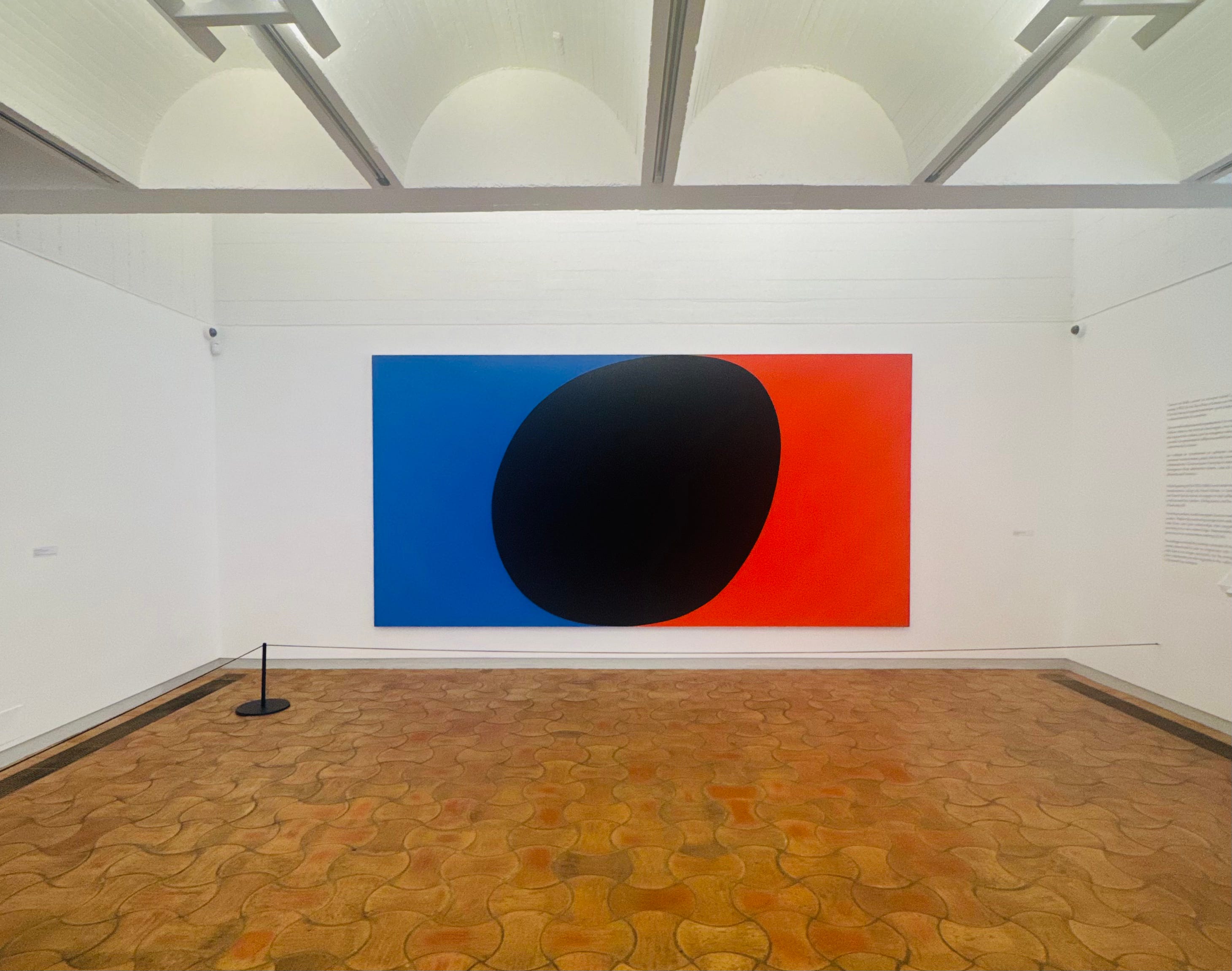
This is perhaps the most interesting way to approach the painting. Red, Yellow, Blue is not a picture of the south of France. It does not depict the garden, the Mediterranean, or the Provençal landscape. Instead, something observed in that environment has been reduced to an arrangement of pure color and form. A year later, Kelly pushed this process into an even more radical direction with Red, Black, Blue, 1964 (Fig. 4), a pivotal painting from the same period. Here, color becomes more assertive and the relationship between color and form more physical. A vast field of red meets blue, interrupted by a large, irregular black form whose position makes the distinction between figure and ground increasingly ambiguous. Unlike Red, Yellow, Blue, where the colors retain a direct connection to Kelly’s experience of the Maeght garden, in Red, Black, Blue, the reference to the visible world has been reduced even further. What remains is the interaction of color, shape, scale, and edge. It is another step in Kelly’s ongoing movement from observation to abstraction, where the original subject becomes increasingly distant and the visual experience itself becomes the subject. That transformation is at the heart of Kelly’s art. The world is the starting point. Abstraction is the destination.
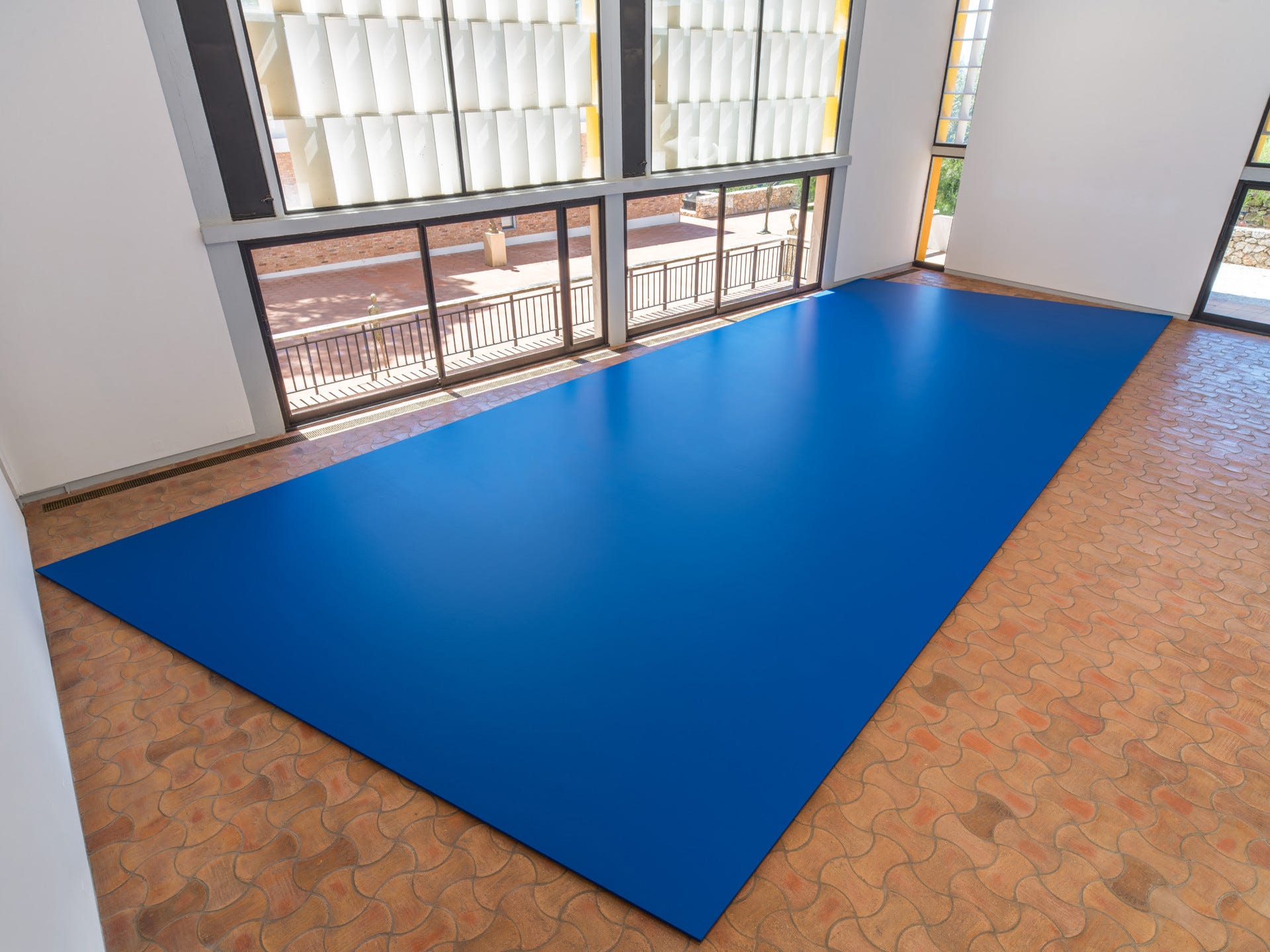
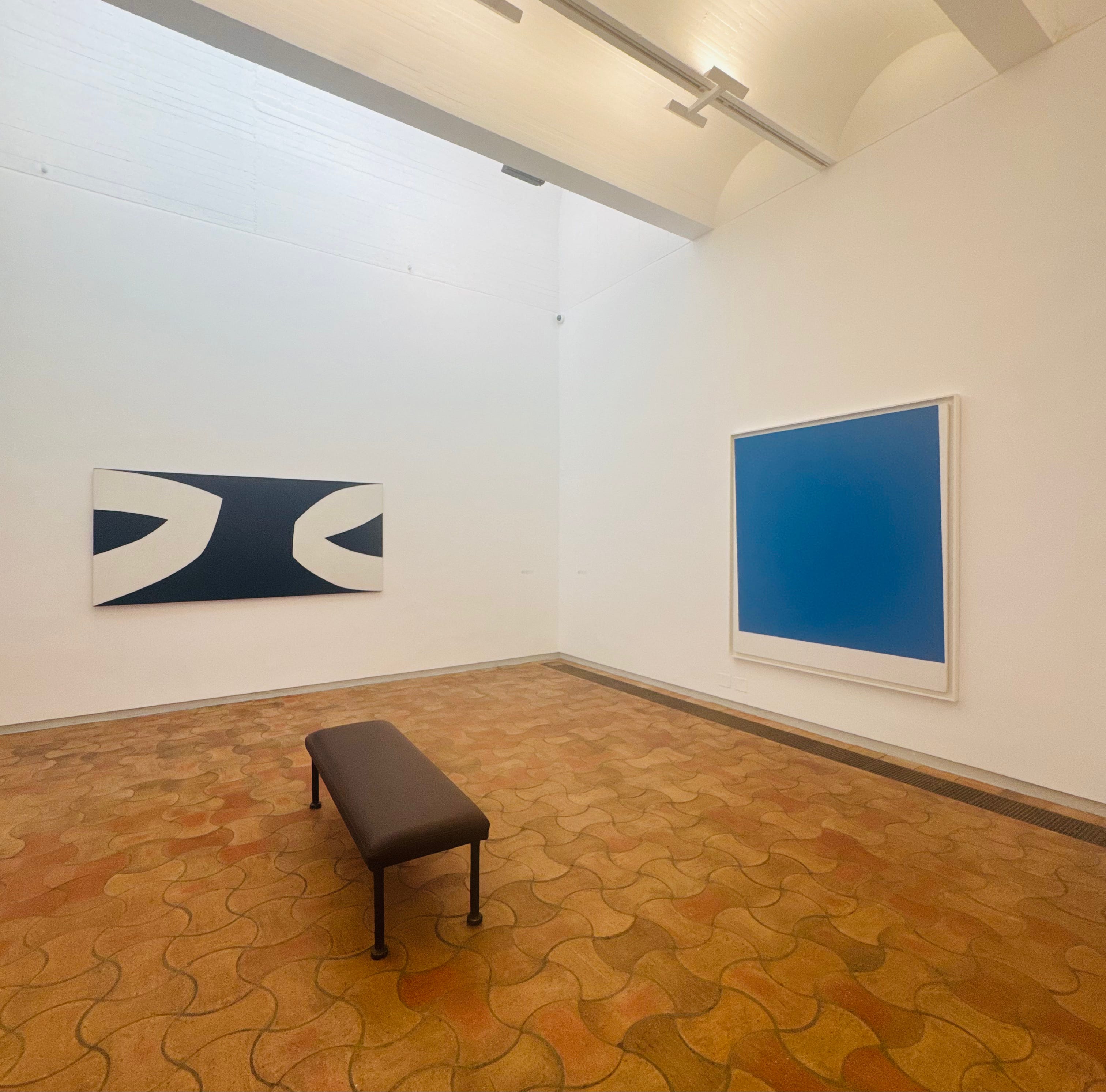
Similarly, another magnificent work in the exhibition, Blue Panel for Leo, 1992 (Fig. 4) makes this transformation almost physical. The work was born from an invitation from Roy Lichtenstein, whose 1992 exhibition at Leo Castelli Gallery in New York centered on variations on Monet's Water Lilies. Kelly responded not by making another image of water, but by changing the very conditions under which a painting could be seen.
The decision was radical; the blue is no longer placed on a wall at eye level. It lies beneath us. A large monochrome blue surface is laid across the floor, occupying almost the scale of an entire room. The conventional position of painting is inverted. Instead of standing before the work and looking toward it, the viewer encounters it beneath the body. The painting is no longer simply something in front of the eyes. It becomes something through which the viewer moves.
The blue does not represent water in the way a traditional landscape painting might. There is no horizon, no reflection, no recognizable shoreline. And yet the association with water is almost immediate. Standing above such an immense expanse of blue, the viewer becomes aware of the physical sensation of looking into a color that seems to extend beyond its physical limits. The work continues a line of inquiry that runs throughout Kelly’s career; how to make color not merely an image, but an experience. The blue field does not ask us to identify something. It asks us to inhabit a perceptual situation. Its gargantuan scale makes the color feel less like pigment and more like an environment.
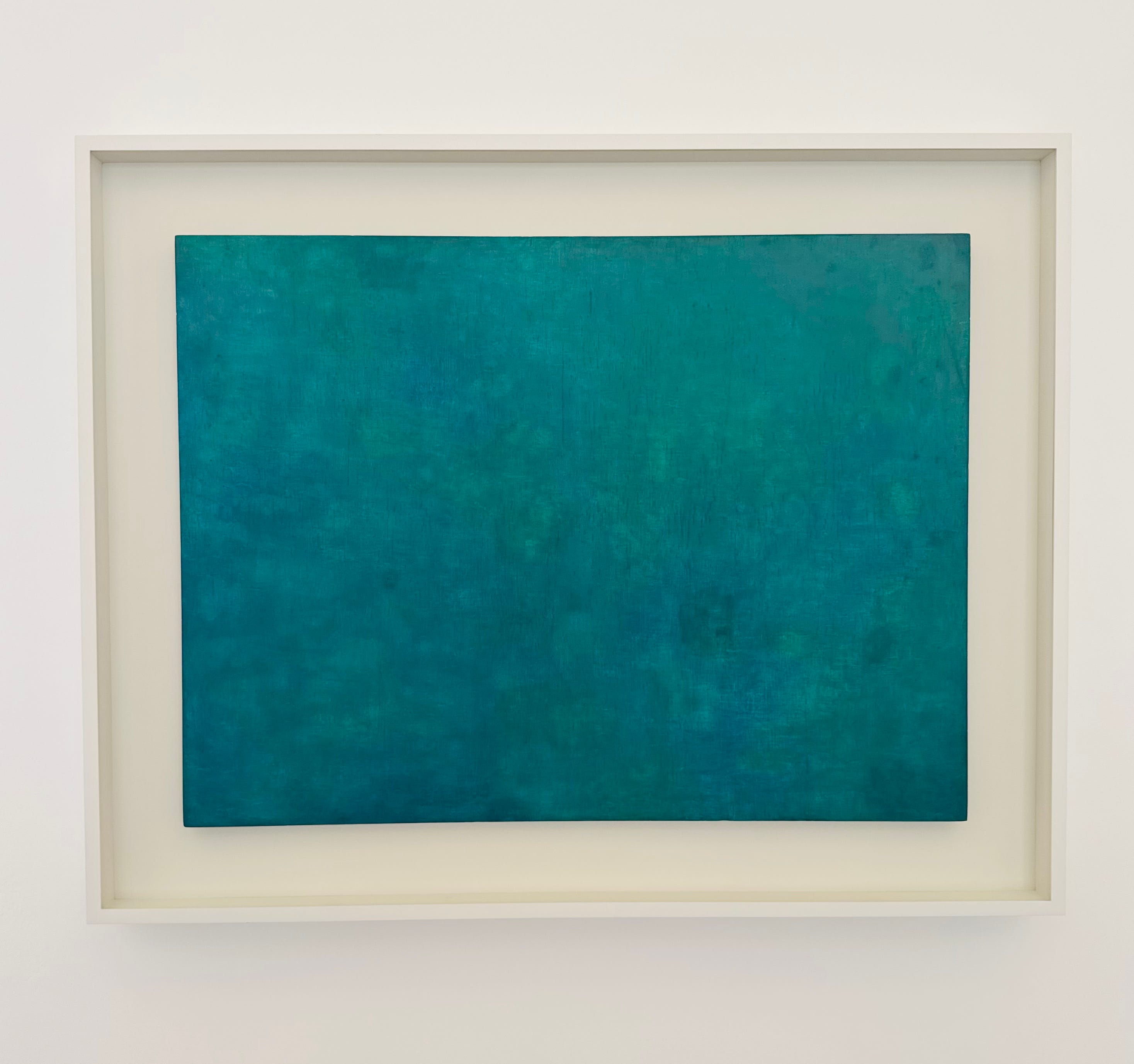
The work also carries with it an art-historical resonance taking Monet and his Water Lilies as an important point of departure, but Kelly strips away almost everything traditionally associated with the paintings. There are no lilies, no garden, no atmospheric brushstroke, no illusionistic depth. What remains is the essential experience of color. This was not the first time Kelly had attempted to reduce Monet's Water Lilies to their most fundamental elements. In 1952, after visiting Monet's house and studio at Giverny, Kelly returned to Paris and began experimenting with the idea of a painting reduced almost entirely to color. The result was Tableau Vert (Fig. 6), a seemingly monochromatic green rectangle in which blue and green coexist without fully merging, and also part of the exhibition. It is not quite a monochrome, but it comes remarkably close to one, and in that tension, Kelly was already testing how little a painting could contain and still remain visually alive. As he later recalled, “I wanted to see if I could make a painting with just one color.” Decades later, Blue Panel for Leo would return to that same question on an entirely different scale, taking color beyond representation and the conventional boundaries of painting itself.
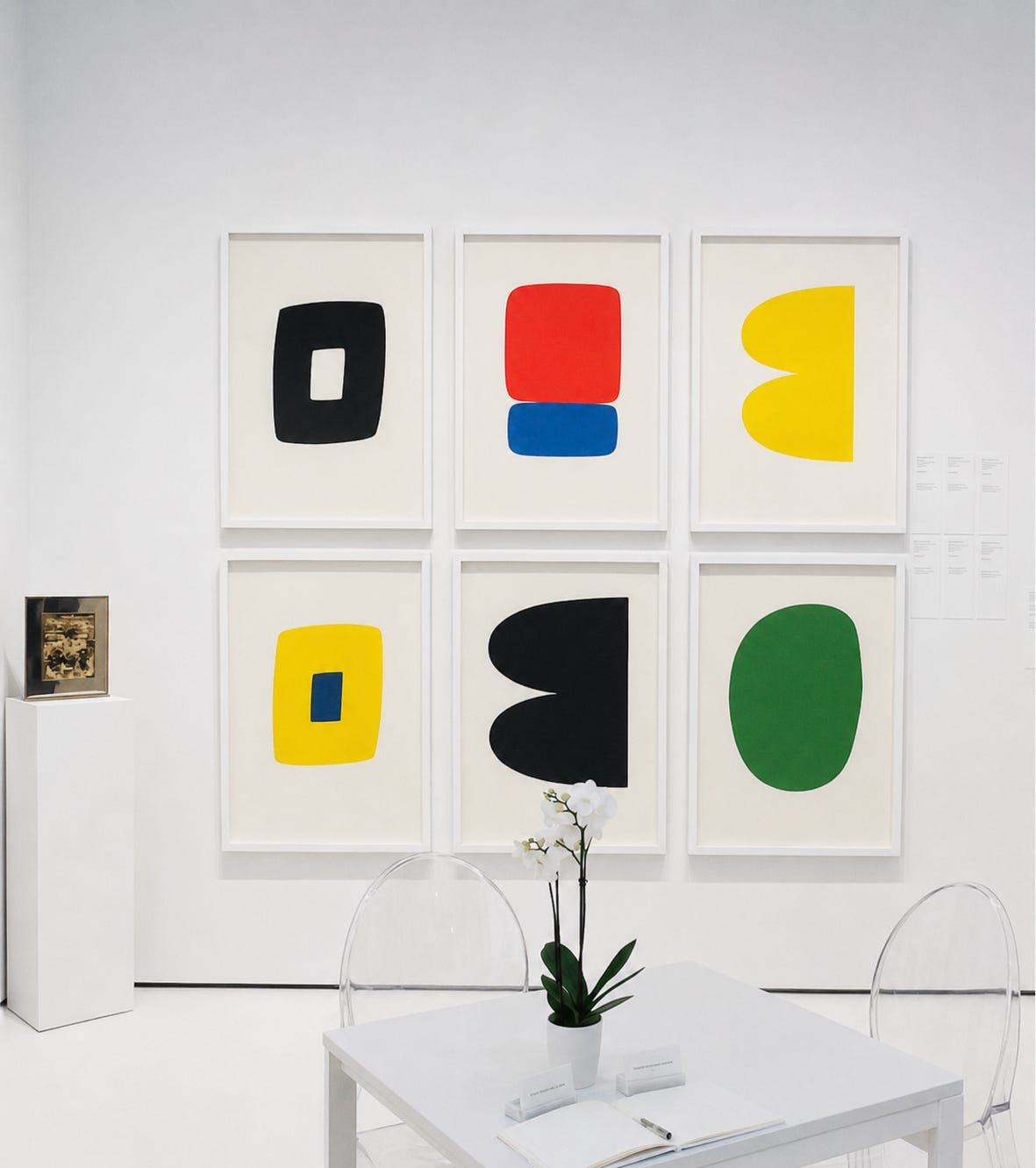
After having experienced At the Edge of Water and walking toward Maeght’s permanent collection, the Suite of Twenty-Seven Color Lithographs, 1964–65 (Fig. 7) takes on another dimension in my view. The prints may initially appear to have little to do with water. Their compositions are defined by simple blocks and rounded forms rather than recognizable landscapes. But Kelly was rarely interested in illustrating what he saw. He was interested in what seeing could produce. A reflection might become a shape. A changing horizon might become an edge. This may be one reason Kelly’s work remains so contemporary. His art does not ask the viewer to recognize an image. It asks the viewer to look.
There is something particularly poetic about encountering these two moments of Kelly’s relationship with the Maeght Foundation in the same visit. First, there is the historical Kelly, the young American artist who spent time with the Maeght family in Saint-Paul-de-Vence, walked through their garden, produced Red, Yellow, Blue and created the extraordinary series of twenty-seven color lithographs through Maeght. Then there is the Kelly being reconsidered today, the mature artist whose lifelong fascination with water is revealed as an important source of his visual language. The two stories are not separate. They are connected by Kelly’s fundamental method, his insistence on looking at the world. Then he removed everything he did not need. What remained could be a color, a contour, a plane, an edge. And eventually those elements became enough to constitute an entire visual language.
That may be the best way to understand Kelly, not as an artist who abandoned the visible world for abstraction, but as an artist who became increasingly interested in how little of the visible world was necessary to evoke the experience of seeing it. At the Fondation Maeght, that idea becomes almost tangible. Somewhere between the garden of the Maeght family in 1963 and the water explored by Kelly throughout his career, one can trace the same impulse, to stand at the edge of what is visible, isolate its essential form, and turn observation into something entirely new.
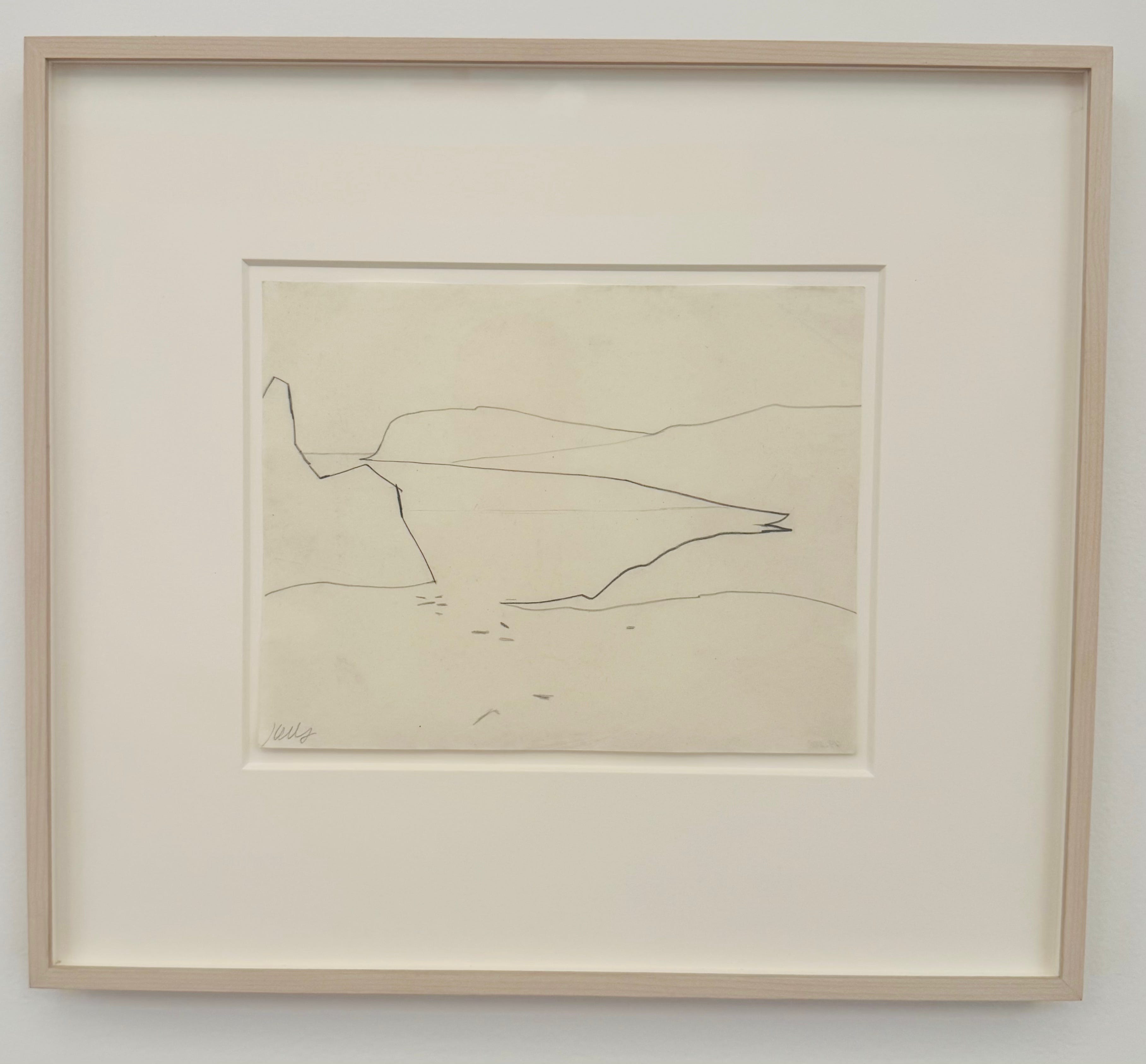
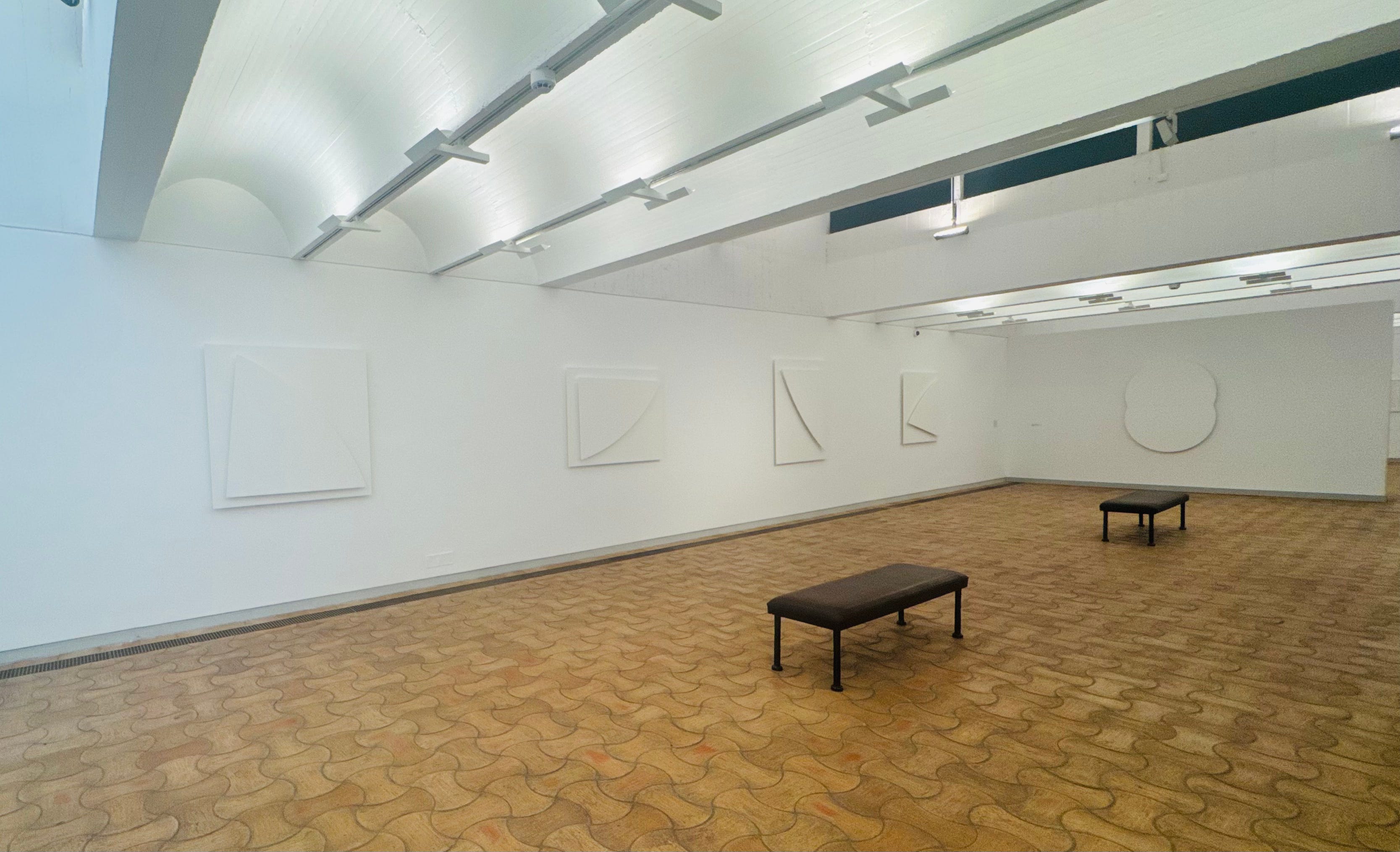
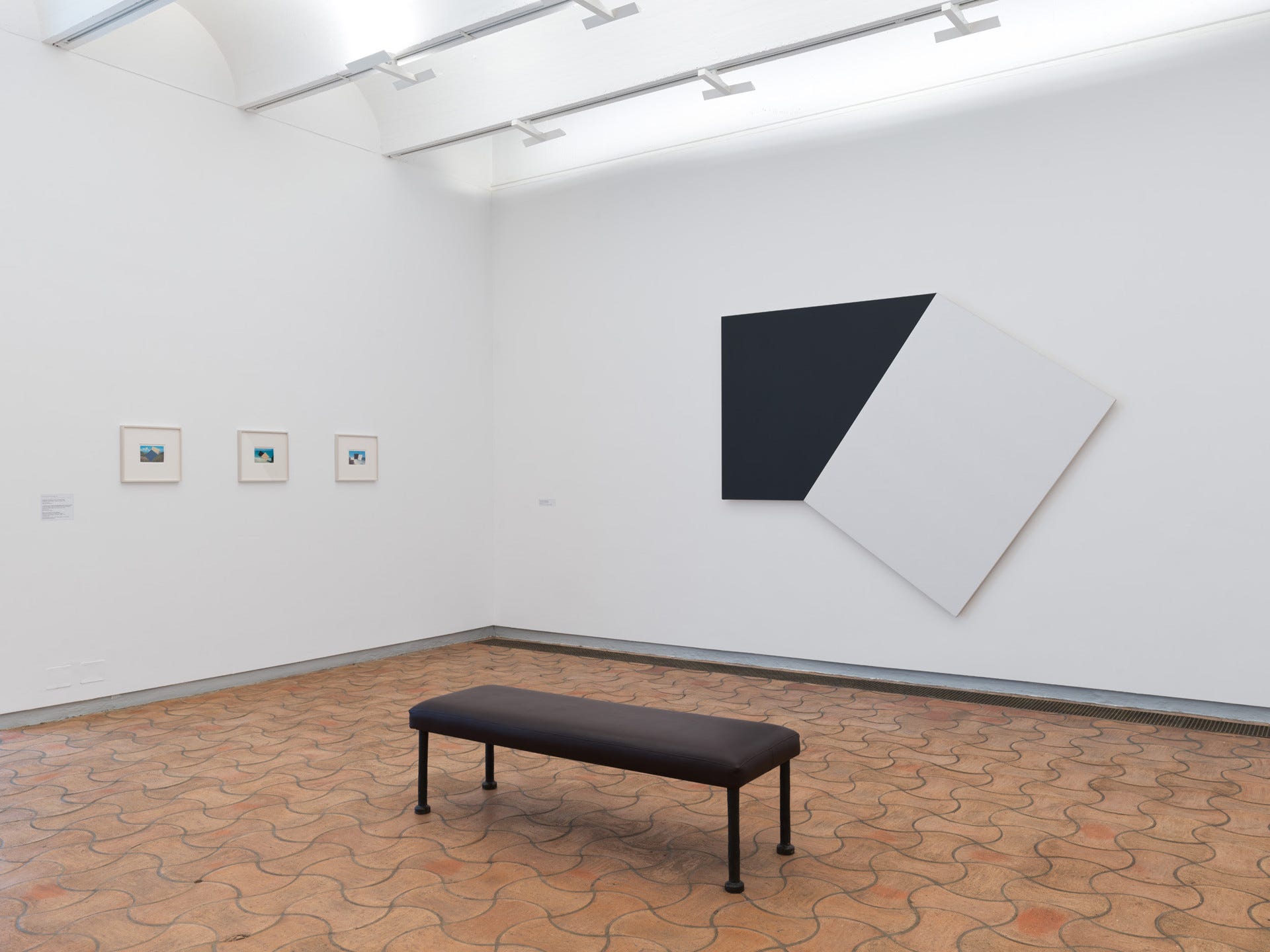
More installation images from At the Edge of Water:
For available works by Ellsworth Kelly click here:
Thanks for reading! Subscribe here to receive Artxiom in your inbox: